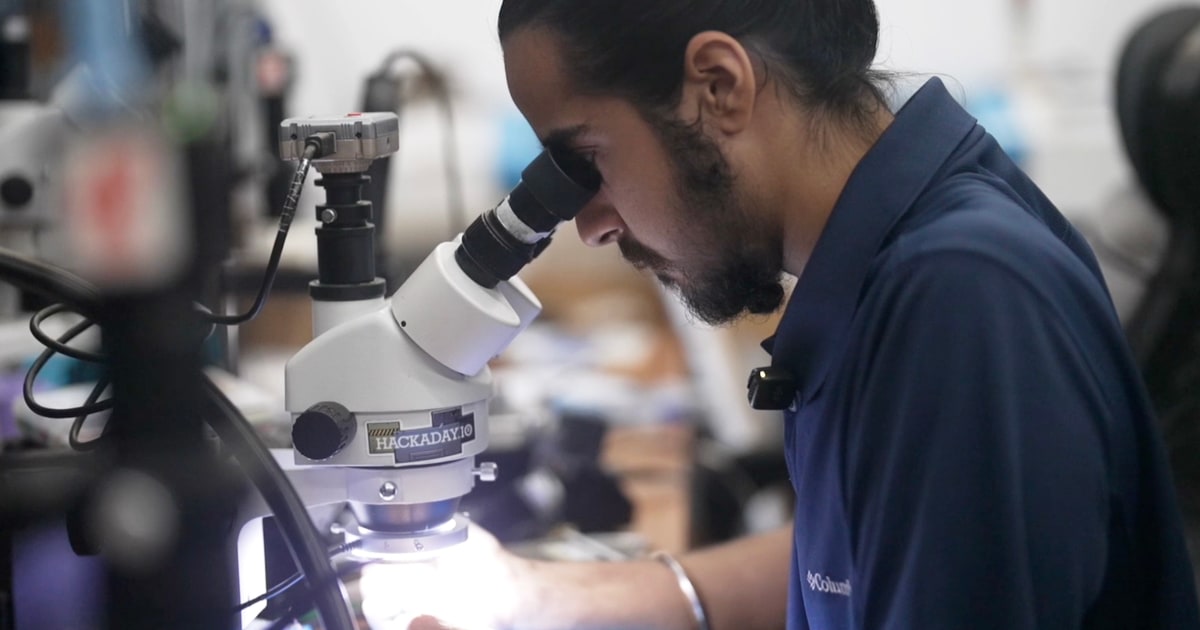
Several American technology startups are relocating from Silicon Valley to Shenzhen, China, drawn by the city's dense network of component suppliers, engineers, and manufacturers that enables rapid hardware development. Entrepreneurs say proximity to original design manufacturers and parts suppliers allows them to design and refine products at speeds not possible in the United States, where manufacturing expertise is scarce and components still ship from China.
Manufacturing Advantage
Nicolo Micheletti, a founding engineer at San Francisco-based smart wearables company Mentra, said virtually everything needed to build a product is a taxi ride from his Shenzhen office. The city hosts original design manufacturers that design and produce goods other companies sell under their own brands, alongside a comprehensive supply chain. Shenzhen, a fishing village half a century ago, transformed after becoming China's first special economic zone in the late 1970s and now houses tech giants Huawei, Tencent, and BYD.
Entrepreneur Perspectives
Heather Nelson, an MIT graduate working at neurotechnology startup Domayn, said the sheer development speed makes the move worthwhile despite language barriers and venture capital concentration in Silicon Valley. Hiteyjit Gujral, co-founder of startup Voyage building "wearables for the mind," emphasized that rapid hardware iteration is essential when components come from Shenzhen. Henk Werner, who runs the Troublemaker incubator, noted designers can send drawings at 1 a.m. and receive prototypes by 7 a.m., describing a cooperative ecosystem where manufacturers need startups to produce and sell products.
Investment Follows
Investors are also establishing presence in Shenzhen. Taylor Ogan, chief executive of hedge fund Snow Bull Capital, said being on the ground allows in-person inspection of nearly every supply chain link for portfolio companies. Ogan acknowledged Silicon Valley still generates great ideas but noted "they're all manufactured here."
Geopolitical Tensions
The trend persists despite U.S.-China tensions. A September State Department report warned China remains "one of the world's most closed major economies" with expanded export controls and intellectual property concerns. China remains on the U.S. Trade Representative's priority watchlist for IP regime deficiencies. The recent controversy surrounding Nvidia CEO Jensen Huang's resignation and reinstatement highlighted ongoing friction over advanced chip sales to China.