By Islam El-Sakka
Two high-speed trains collided on the Madrid-Seville line in central Spain on Wednesday morning, killing at least 68 people and leaving dozens injured in the country's worst rail disaster since 2013.
Signaling Failure and Collision
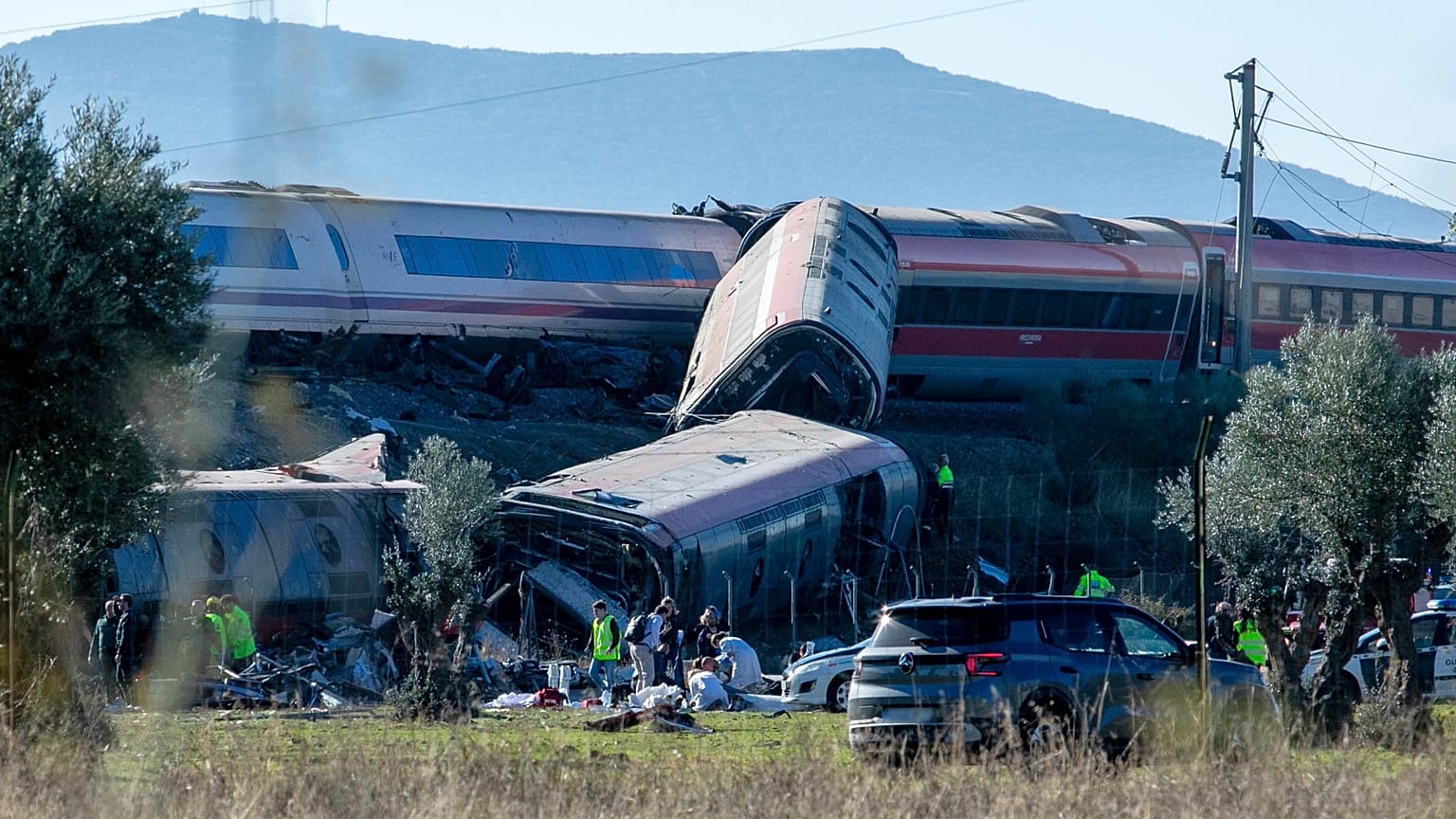
The crash occurred around 08:30 local time when a Renfe train carrying 397 passengers struck the rear of a stationary Iryo train with 147 passengers between the municipalities of Mora and Orgaz, about 140 kilometres south of Madrid. A computer failure in the automatic signalling system had forced all trains to halt on the affected stretch. Transport Minister Óscar Puente said the Renfe train was then ordered to proceed in "error," leading to the collision.
Passenger Accounts of the Impact
Tangui Binier, 22, was in the front carriage of the Iryo train when it was hit. He described the train suddenly speeding up before a violent stop, followed by smoke and fallen electrical wires. Spanish journalist Roberto Gómez, aboard the Renfe train, said the impact was terrible, with luggage strewn across a destroyed carriage and a passenger suffering a deep head wound. Rafael Barcelo, in one of the worst-hit carriages, counted at least eight victims in his coach alone. Salvador Arriza reported that a piece of rail track pierced the roof of a carriage, possibly reducing the train's inertia. Sebastián Herrero, on the struck train, spoke of broken noses and arms amid thick smoke.
Aftermath and Growing Anger
Survivors described scenes of bodies and missing limbs as they escaped the wreckage. Local residents arrived first, followed by Guardia Civil police and ambulances. The disaster comes less than a year after a high-speed crash near Córdoba killed 46 people on the same line. Passengers expressed anger that the stopped train was not warned while the other was allowed to move, questioning how such a failure could happen with modern technology.