
By Islam El-Sakka
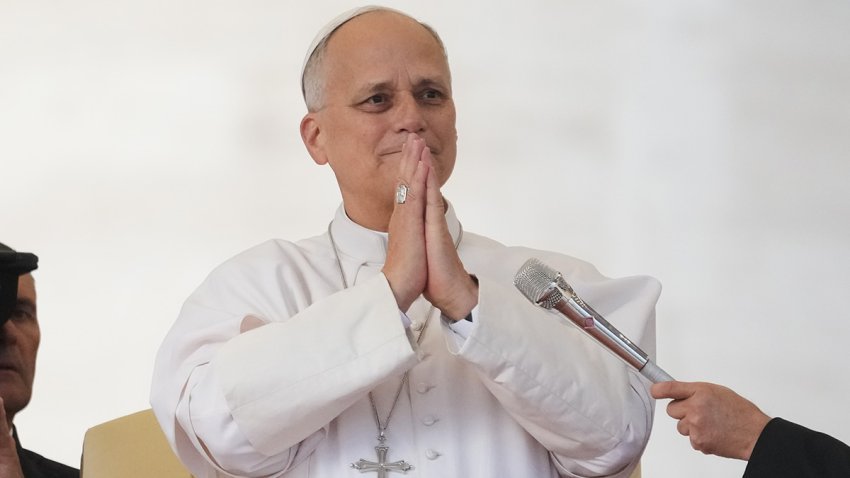
Pope Leo XIV has begun a three-nation tour of Latin America with a visit to Uruguay, the region's least Catholic and most secular country, just three weeks after undergoing lung cancer surgery that had cast doubt on the trip. The 71-year-old pontiff arrived in Montevideo following a 13-and-a-half-hour flight from Rome and faces a packed three-day schedule that includes a stop in a neighborhood affected by gang violence, a Mass in Paysandú, 375 kilometres from the capital, and another Mass in the city of Florida, about 100 kilometres away. The Uruguay leg is the first stop on what will be the longest and farthest journey of his pontificate, undertaken while he continues his recovery.
Health and Recovery
Vatican communications chief Maria Montserrat Alvar said the pope's stamina is fantastic and noted that he has passed the 14-day convalescence period required by doctors after his October 13 surgery. She added that his doctors are very confident and that he will have ample medical care on board, though they do not anticipate any issues given his current condition.
Visit to Secular Uruguay
Uruguay has not hosted a papal visit since 1988. With only a fraction of self-identified Catholics attending Mass regularly, the country is considered the most secular in Latin America, a region home to about 40% of the world's 1.4 billion Catholics. Upon arrival, Pope Leo XIV met with President Yamandú Orsi, leader of the centre-left alliance that took power in March 2025, and delivered a welcome address to government officials and diplomats before concluding the day with a vespers service at the city's cathedral. The pope is expected to remind Uruguay's 3.5 million people of their Catholic heritage dating to Spanish colonial rule and to propose the faith anew as an answer to contemporary challenges.
Secular Laws and Church Opposition
Uruguay was the first country to legalise recreational marijuana, the second in Latin America to decriminalise abortion, and the third in the Americas to legalise same-sex marriage. More recently, it became the first in the region to approve assisted dying legislation over strong Catholic Church opposition, reflecting an entrenched church-state separation that prohibits any mention of God in oaths of office. The pope is expected to recall the church's opposition to abortion and euthanasia as part of his broader argument for upholding human dignity at all stages of life.
Enthusiasm and Historical Roots
Uruguayan church officials have expressed surprise at the enthusiasm surrounding the visit, with tickets for the pope's prayer vigil at Montevideo's Centenario Stadium selling out within two days. Guzmán Carriquiry, Uruguay's former ambassador to the Holy See, said the pope's presence is breaking down a veil that has long obscured the Catholic tradition at the country's foundation. He expects the pope to revive those roots, particularly when he travels to Florida on November 8 to mark the feast of the Virgin of the Thirty-three, a wooden icon linked to Uruguay's 1825 independence declaration.
Expert Skepticism
Andrew Chesnut, chair of Catholic studies at Virginia Commonwealth University, said the warm welcome may not translate into increased church attendance. He described Uruguay as a lost cause for revitalising Catholicism, a situation that has persisted for decades.
