By Basant El-Faramawy
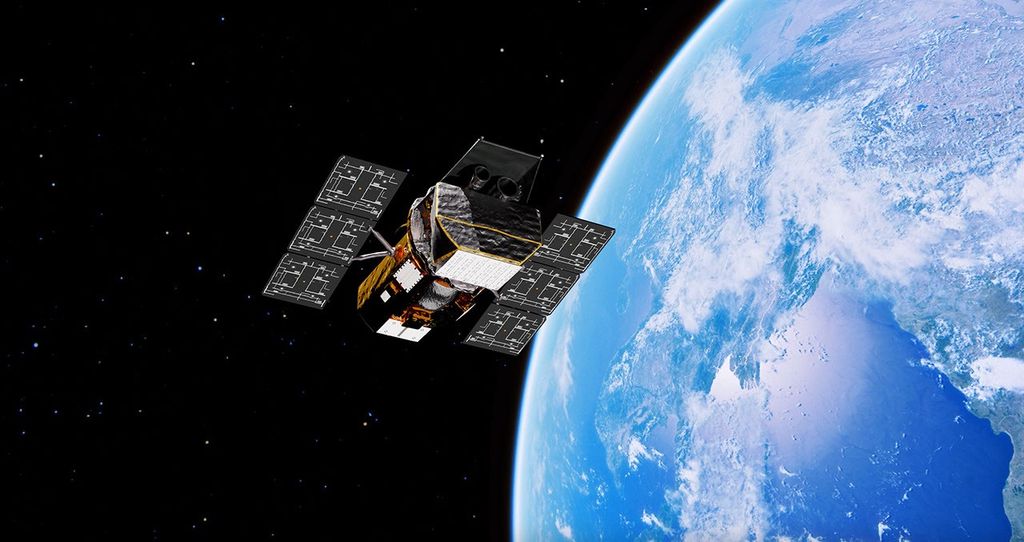
NASA's Swift Observatory reentered Earth's atmosphere on Wednesday, ending a 22-year mission that far exceeded its original two-year design. The U.S. Space Force confirmed the 1.5-ton spacecraft fell near Indonesia after its orbit decayed due to intense solar activity in recent years.
Mission Ended After Failed Recovery Attempt
The reentry came less than three months after a high-risk recovery effort failed. NASA had contracted Katalyst Space to launch a robotic vehicle in July to raise Swift's orbit, but the craft encountered issues and crashed in September. NASA expected several dense components to survive reentry, though the exact amount of debris remains unconfirmed.
Swift's Scientific Legacy
Launched in 2004 to study exploding stars and gamma-ray bursts, Swift operated 11 times longer than planned. It catalogued more than 2,000 gamma-ray bursts and 1,400 supernovae, along with numerous comets, asteroids, and star-shredding black holes. The telescope's ability to swivel rapidly toward erupting celestial events made it a crucial early notifier for deeper-probing instruments.
NASA Turns Attention to Hubble
With Swift's demise, NASA is now assessing commercial interest in a recovery mission for the Hubble Space Telescope, which faces reentry by the mid-2030s. The agency seeks proposals to lift Hubble's trajectory, modernize its hardware, or execute a controlled deorbit, with any intervention required by 2032. NASA officials say Hubble still has important science ahead and they are exploring every reasonable opportunity to extend its life.