By Basant El-Faramawy
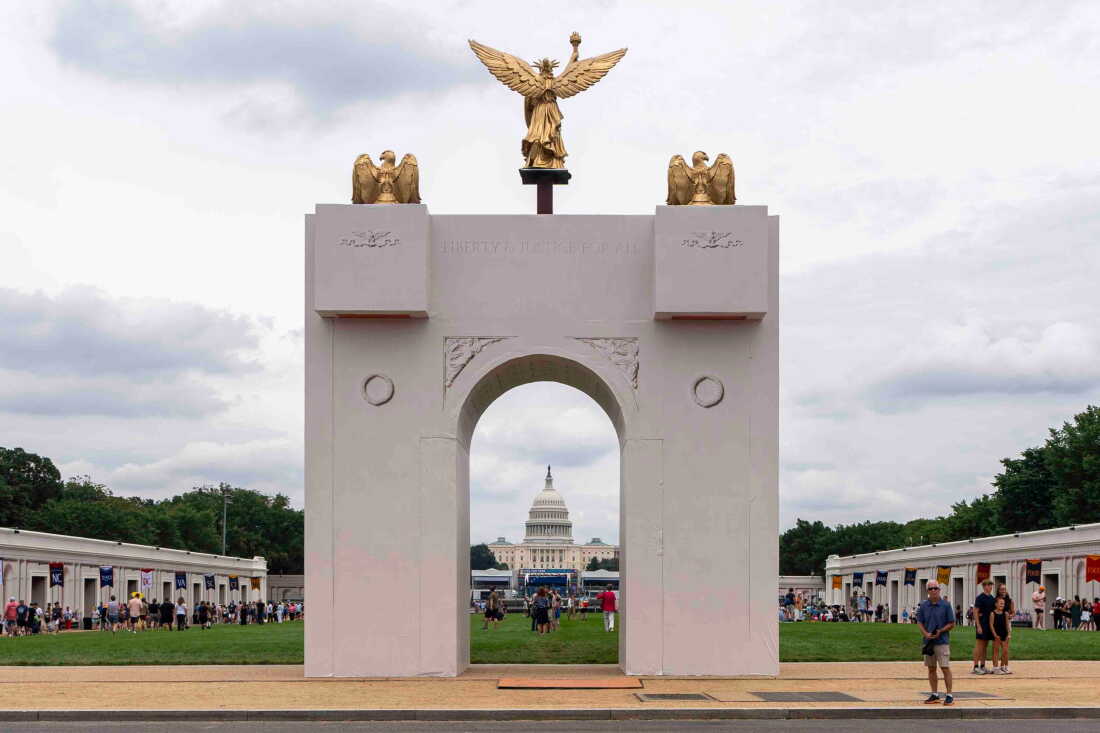
The US Justice Department said Tuesday that President Donald Trump's proposed 250-foot triumphal arch in Washington would not be finished until after his second term concludes.
If approved, the department expects six to eight months of initial excavation and foundation work starting as early as Thursday, with above-ground construction beginning in May 2027 at the earliest. Total construction is projected to take 33 to 39 months.
The structure, modeled on Paris' Arc de Triomphe, is planned near Arlington National Cemetery in Virginia, across the Potomac River from Washington.
Approval Process
The National Capital Planning Commission meets Thursday to consider approval, and the Department of the Interior noted in court filings it may issue a final decision that day. The National Park Service could also grant a permit or authorization on Thursday.
Legal Challenges
The project faces significant legal opposition. On Saturday, Virginia and the District of Columbia sued the Department of the Interior and the National Park Service to halt construction, calling the move "legally indefensible" and stating Congress has not approved it. Several veterans have also filed suit, arguing the monument would destroy the historic sightline between the Lincoln Memorial and Arlington National Cemetery.
Government lawyers asked US Judge Tanya Chutkan in the District of Columbia to deny the injunction. They argued the arch's location and height could help defend the capital against evolving threats such as drones.
Aviation Safety
Concerns have been raised about the arch's proximity to Reagan Washington National Airport and its position in key flight paths. The Federal Aviation Administration determined the structure presents no aviation safety risks, noting an eternal flame and floodlight projectors directed at the arch will maintain pilot visibility.
Broader Plans
The monument is part of Trump's wider efforts to remake Washington, which include renovating the Lincoln Memorial Reflecting Pool, redeveloping an East Potomac Park golf course, and adding his name to the US Institute of Peace and the Kennedy Center for the Performing Arts.