By Fatma Younis
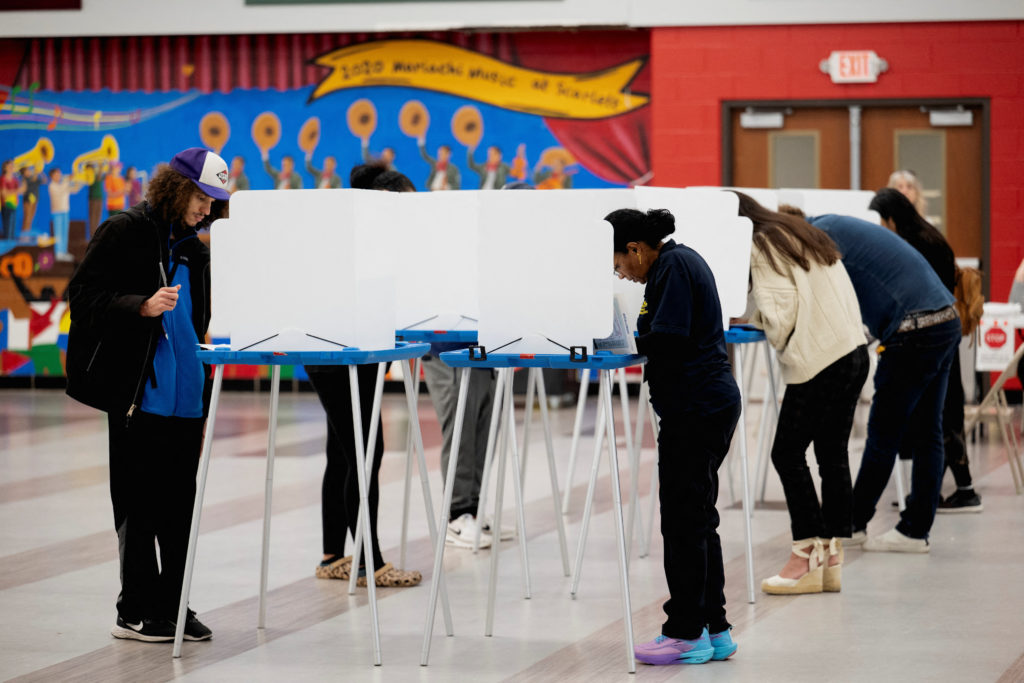
Millions of Americans lined up at polling stations nationwide on 3 November 2026 for midterm elections that will determine control of the US Congress and key checks on President Donald Trump. With all 435 House seats, 35 Senate seats, 39 governorships and thousands of state legislative positions at stake, voters cited a mix of national and local issues driving their decisions.
Maine voters split on Trump, rule of law
In Portland, Maine, technology professional Todd Cox, 63, voted for Democratic Senate challenger Troy Jackson instead of incumbent Republican Susan Collins, whom he had supported twice before. Cox said his decision reflected broader concern "for the direction the country is going in," citing bullying from the administration, the war in Iran and "disregard for the rule of law." At the same Merrill Auditorium polling station, Colby College professor Maple Razsa, 55, expressed alarm over ICE raids in Portland, saying "the political system is just run amok." Another Maine voter, a 63-year-old man who declined to be named, voted straight Republican, dismissing the Iran conflict as "not a real war" and emphasizing support for Israel.
Georgia voters weigh local issues over presidential dislike
In Johns Creek, Georgia, attorney David Boy voted Republican despite "staunch antipathy" for Trump, saying he never voted for him and wants to "go to my deathbed saying I never did." Boy prioritized school quality, taxes, faith-based values and government efficiency. Fellow Johns Creek resident Jason Griffin, an engineer, voted Democratic specifically because of Trump, saying he used to prefer Republican policies but changed his view.
Michigan resident cites economic, social concerns
In Dearborn, Michigan, a woman in her 60s identified only as Sona voted Republican, describing the state as "in a dumpster fire." A self-described lifelong conservative, she opposed abortion and transgender athletes in women's sports, and pointed to wages roughly $10,000 below neighboring states and high electric bills as economic grievances.
Alaska voters face high costs, candidate controversy
In Anchorage, carpenter John House, 62, voted Republican, saying Trump "talks too much, but he's done so much for us" and calling a Democratic vote foolish. Conversely, Chaunice Carr, 27, voted for Democratic Senate candidate Mary Peltola, calling it "insanely important" to counter violence, ICE raids and deportations. Juanita Cupa, 30, also backed Peltola, citing crushing living costs — $120 every two weeks for fuel — and criticizing Trump for "spreading hatred, racism." Alaska's race has been roiled by allegations that Peltola's campaign recruited a same-named candidate to confuse voters, which Peltola denied.