By Islam El-Sakka
Investigators have recovered pieces of the horizontal tail section from a Learjet that crashed in Florida, confirming the aircraft was breaking apart before it slammed into the ground and killed all nine people on board.
Tail Section Found Far From Impact
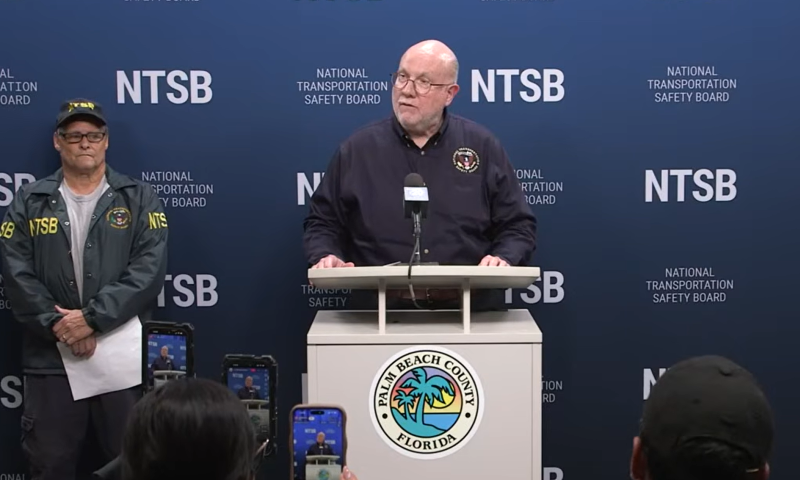
National Transportation Safety Board member Tom Chapman said at a Tuesday news conference that the tail parts were discovered more than a mile from the impact crater in Greenacres. The tail had broken into three pieces, and Chapman said the plane would not have been able to pull out of its nose dive without the tail intact.
Co-Pilot's Final Transmissions Detail Descent
The jet was en route from Austin, Texas, to the Bahamas on Sunday when it encountered a thunderstorm at 35,000 feet. Co-pilot Nathalia Filgueiras, 20, reported icing and turbulence that caused the aircraft to climb and fall by more than 700 feet before entering a dive. In radio transmissions, she said the plane was descending at 8,000 feet per minute, then 10,000 feet per minute, and finally declared an emergency while descending at 20,000 feet per minute. Seconds later, the jet crashed near a trailer park at the intersection of Military Trail and Cresthaven Boulevard in Palm Beach, exploding into a fireball.
Victims Identified
The victims have been identified as technology entrepreneur Adam Robinson, his wife Helen Sharp, their two young children, family friends Rachael Reed and Charmi Fehr, their nanny Anita Maria Cetina, and the pilot, 55-year-old Jeff Gregory of East Coast Jets.
Investigation Focuses on Weather
Chapman said weather will be a key focus of the investigation. Filgueiras had texted her boyfriend before the situation turned critical: "I've got turbulence, I've got ice." The NTSB urged anyone in the area who finds possible aircraft debris to leave it in place and contact authorities.
Preliminary Report Expected in Month
A preliminary report describing the sequence of events will be released in about a month, but determining the exact cause of the crash will likely take more than a year.