By Islam El-Sakka
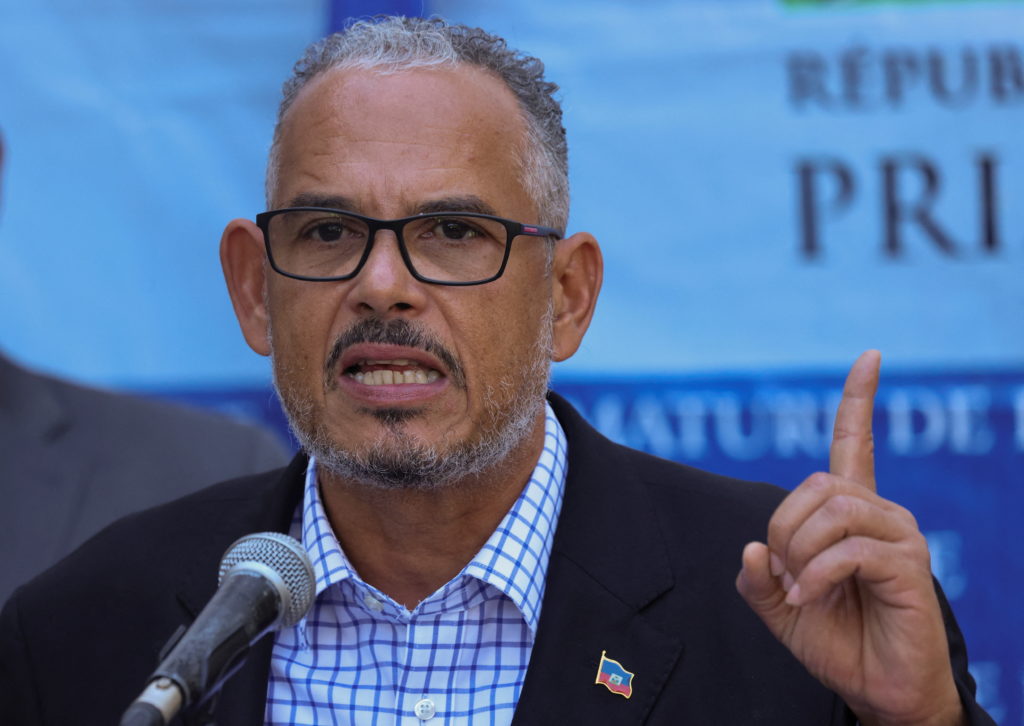
Haiti's prime minister, Alix Didier Fils-Aimé, spoke publicly on Tuesday for the first time since four Salvadoran aviation technicians went missing last month, an incident that prompted El Salvador to deploy more than 2,000 troops to the Caribbean nation. Flanked by a Salvadoran army colonel, the leader of the U.N.-backed gang suppression force, and Haitian military and police officials, Fils-Aimé emphasized that the international force is present to support Haiti, not to replace the state.
Concerns grow about role of El Salvador's troops in Haiti
Fils-Aimé thanked Salvadoran President Nayib Bukele, saying he understands Haiti's fight against gangs. However, a source familiar with on-the-ground operations told The Associated Press that before the October 18 attack on the technicians, El Salvador had not signed an agreement with the U.N., lacked a protection agreement with Haiti's government, and had no memorandum of understanding with the Dominican Republic for medical evacuations of U.N.-backed force personnel. A lobbyist for El Salvador's government asserted close coordination but declined to clarify the troops' chain of command or operational details. Until the attack, the roughly 200 Salvadorans in Haiti had primarily provided medical assistance; the whereabouts and mandate of the newly deployed troops remain unclear.
Haiti embraces foreign forces
The prime minister outlined government priorities to reestablish security nationwide and hold elections, declaring that Haiti has entered a decisive stage. His remarks came a day after the U.N. stated that most Salvadoran personnel are not operating under the U.N.-backed force framework, with spokesman Stéphane Dujarric stressing the need to respect human rights during security operations. Fils-Aimé said more than 1,000 new police officers recently graduated, with a goal of adding 4,000 police and 15,000 soldiers to anti-gang efforts. Operations have been launched in Kenscoff, Gressier, and the Artibonite region, areas that have suffered brutal gang violence. The U.N. reports more than 5,700 people killed or injured across Haiti from January to mid-September.
Salvadoran troops come under scrutiny
Experts and security practitioners are raising questions about the terms of the Haitian government's agreement with El Salvador, who commands the troops, their rules of engagement, and the deployment's duration. Romain Le Cour, head of the Haiti Observatory at the Global Initiative Against Transnational Organized Crime, warned that the lack of transparency risks a damaging precedent for multilateral missions. He noted five separate structures currently operating in Haiti — the national police and army, the gang suppression force, a task force working with the private security firm Vectus Global founded by Erik Prince — each with its own mandate and no common plan, describing the response as an orchestra without a conductor.
Gang-penned letter to UN attracts attention
The press conference followed a letter from the leader of the powerful 400 Mawozo gang to U.N. Secretary-General António Guterres requesting a delegation for dialogue and mediation, citing fears that Salvadoran troops could escalate violence. Le Cour suggested the letter indicates pressure on gangs and a potential strategic move for recognition. The U.N. stated that receiving such communications does not imply recognition or endorsement of sanctioned individuals. It remains unclear whether Guterres will respond.