
By Salma El-Sakka
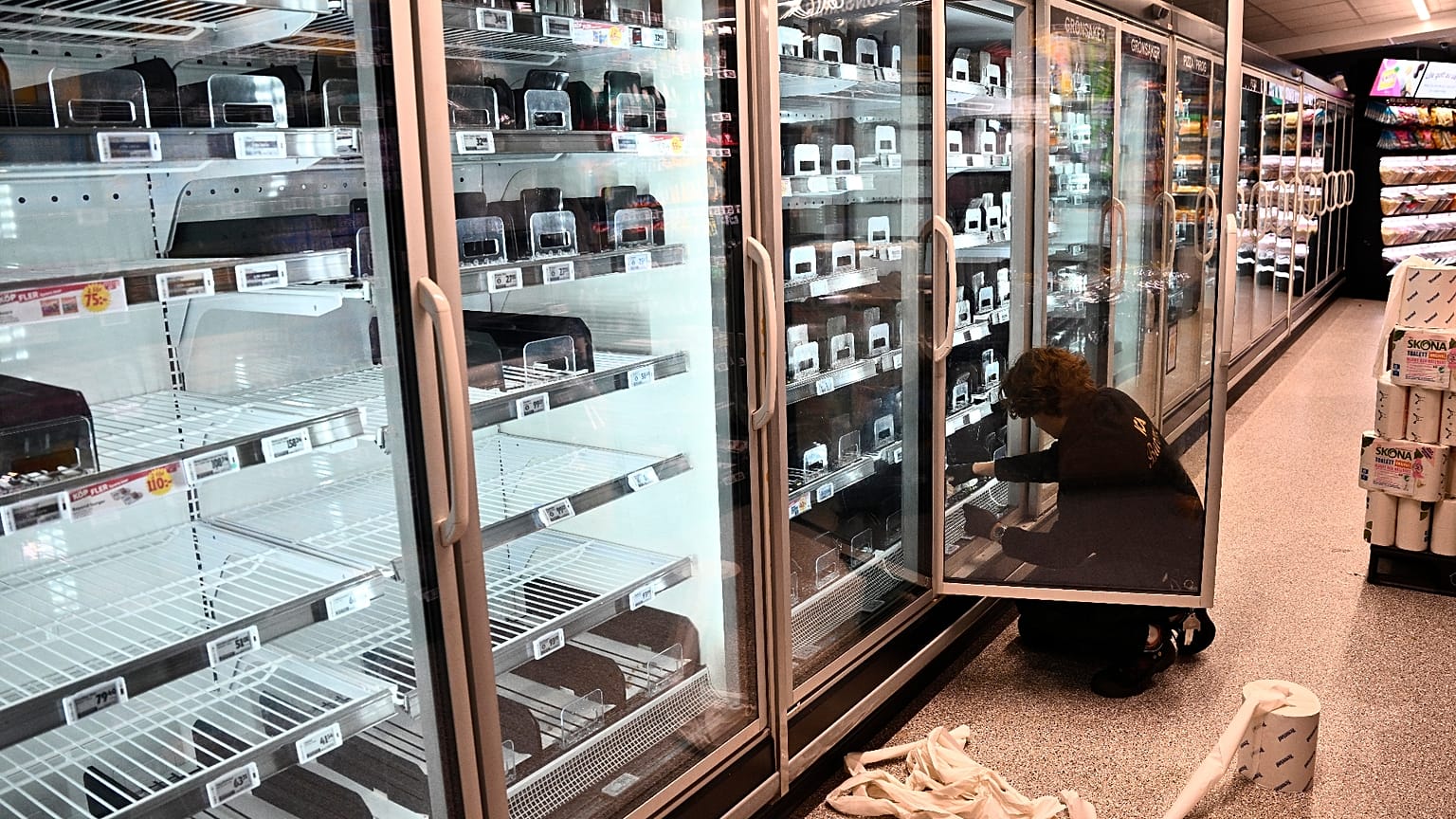
Mysterious cyberattacks on European supermarket refrigeration systems have officials across the continent scrambling to assess the damage. Supermarkets in at least half a dozen countries reported this week that their fridges and freezers were remotely taken over and heated up, spoiling tons of food at a cost of millions of euros.
What Happened and Who Was Affected
Incidents were reported on Monday in Sweden, Belgium, Luxembourg, Ireland, Italy, Estonia and Greece. A Swedish supermarket said its units were set to 50 degrees Celsius (122 Fahrenheit). In Athens, a butcher shop owner said a refrigeration unit was hacked and raised to 150 degrees Celsius (302 Fahrenheit); a technician regained control after two hours. The owner said a nearby supermarket and a fast-food restaurant experienced the same issue, prompting them to disconnect the units from Wi-Fi.
Fridges Connected to Save Money and Cut Waste
Supermarkets connect refrigeration systems to monitor temperatures around the clock, receive spoilage alerts, reduce energy costs and allow remote repairs. Cybersecurity experts say this convenience creates entry points that must be secured like any IT system. The attacks mirror earlier breaches in France, Belgium and the Netherlands, which French investigators linked to outdated remote control modules made by Danish firm Danfoss and U.S.-based Copeland, as well as Dixell xweb systems. Both Danfoss and Copeland said the affected products were older, discontinued models no longer receiving security updates.
Experts Warn of Legacy Technology Risks
Analysts say organizations are investing heavily in new technologies like AI while neglecting critical infrastructure that runs on outdated hardware. "Nobody broke into these refrigeration systems with a zero-day," said Nicole Carignan of Darktrace. "They got in through internet-facing controllers, end-of-life firmware, and default passwords." U.K. cyber minister Liz Lloyd called the French incident a result of exploiting known vulnerabilities and poor cyber hygiene. The U.K. National Cyber Security Centre said the French fridges were connected directly to the internet with default passwords and worked through Monday night contacting organizations with exposed vulnerable technology.
No Evidence of AI Involvement
Despite recent concerns about advanced AI systems conducting autonomous hacks, experts said Tuesday there is no indication AI powered these attacks. "The techniques did not require it," Carignan said. Paul Chichester of the U.K. cyber centre added that the vulnerabilities exploited have been known for a long time.
Investigations Ongoing, Motive Unknown
France's ANSSI cybersecurity agency has been investigating since mid-October and coordinating protective measures. Italian cyber officials met Tuesday to discuss the incident, and European Commission officials held similar talks. A Commission spokesperson declined to attribute the hacks, saying that is up to national authorities, but stressed the incidents "are not isolated" and Europeans must be collectively resilient.


