
By Islam El-Sakka
Exit polls capture the views of voters in person on Election Day, providing early insight into who is voting and what motivates their choices. Unlike pre-election opinion polls, these surveys interview actual voters as they leave polling places, and also reach early and mail-in voters through phone, mail, and online methods.
Who Conducts the Exit Poll
For the 2026 midterms, exit polls are conducted by SSRS, a survey and market research firm, on behalf of a consortium of news organizations including NBC News, ABC News, The Associated Press, CBS News, CNN, Fox News, and MS NOW. Each organization receives the same raw data and independently analyzes and reports the results.
Questions Asked
The national questionnaire asks respondents which party's House candidate they supported, and in many states also covers Senate and governor races. Additional questions cover the most important issue facing the country and demographic details such as age, gender, race, and education level. Demographic data is used to weight the poll so it reflects the electorate's composition.
How Exit Polls Are Conducted
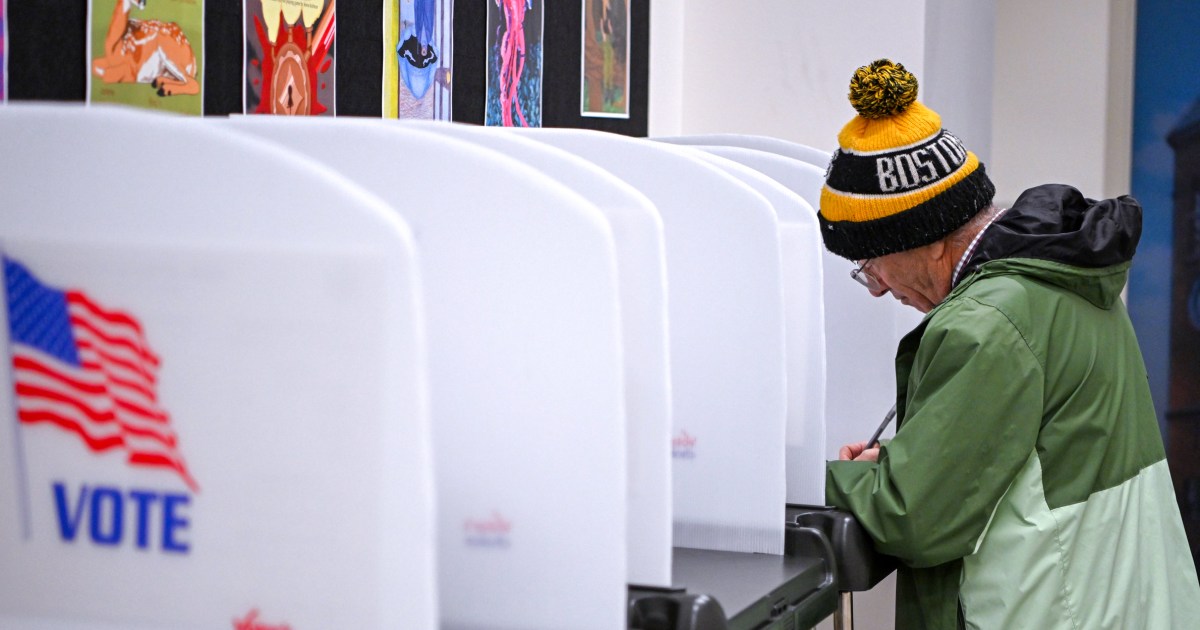
On Election Day, interviewers are stationed at over 450 polling locations across 15 Senate battleground states. They approach voters at systematic intervals — for example, every third or fifth person — from poll opening to closing. Paper questionnaires contain about 25 questions and are completed in English or Spanish. A pre-election survey also captures early and mail voters through mailed invitations, telephone, text, and online interviews, with follow-up to confirm turnout and final vote choice.
Anonymity and State Coverage
In-person responses are anonymous; voters deposit completed forms in sealed boxes. Phone, mail, and online interviews retain no personal identifying information. Beyond a national exit poll covering all 50 states, state-level exit polls will be conducted in 45 states with consequential Senate or governor contests.
Sample Sizes
The national sample will exceed 75,000 voters across voting locations, online, and telephone. In the 15 battleground states — Arizona, California, Florida, Georgia, Iowa, Maine, Michigan, Minnesota, Nebraska, Nevada, New Hampshire, North Carolina, Ohio, Pennsylvania, Texas, and Wisconsin — about 4,000 voters will be interviewed at a minimum of 30 randomly sampled locations each. Alaska will have roughly 3,000 interviews including early-voting sites. All other states with Senate or governor exit polls will sample between 500 and 3,000 voters.
How NBC News Uses Exit Poll Data
The NBC News Decision Desk uses some exit poll data to help project race outcomes on election night, but the primary purpose is to tell the story of the election — revealing who turned out, what drove their decisions, and how they view the country's direction. No exit poll results are reported before 5 p.m. ET on election night, and no results that could indicate a race outcome are released until after all polls are scheduled to close in that state. Data is updated and reweighted in real time as interviewers phone in results throughout the day.


