By Basant El-Faramawy
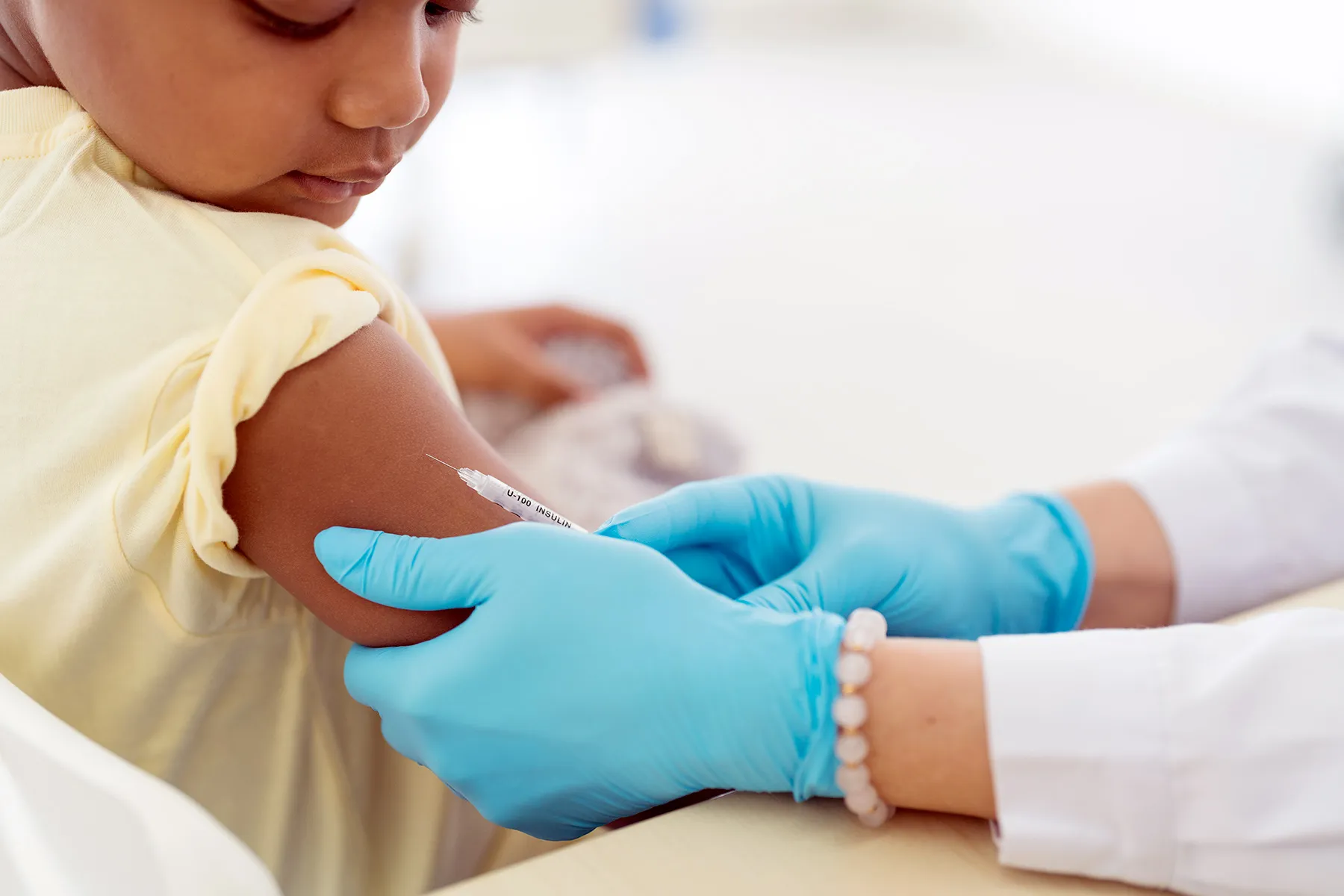
Measles cases in the United States have doubled compared with the previous year, driving a growing number of parents to request the second dose of the measles, mumps and rubella (MMR) vaccine earlier than the standard schedule.
The Centers for Disease Control and Prevention (CDC) routinely recommends the first MMR shot after a child’s first birthday and the second between ages four and six. However, the agency notes the second dose can be administered as soon as four weeks after the first, a timeline that matches recommendations in Germany, the United Kingdom and France.
Accelerated schedule gains support
“More parents have heard about doing it ‘early’,” said Elias Kass, a naturopathic physician and vaccine advocate in Seattle. He began advising the combined MMRV shot at 15 months when measles cases started rising several years ago, and said demand for the accelerated schedule has increased.
In Chicago, mother Margot Taylor has adjusted the vaccination timeline for each of her three children as outbreaks spread. Her oldest, born in 2019, received doses at ages one and four. For her second child, born in 2023, a pediatrician recommended the second shot at age two during a local outbreak. Her third, born in 2025, got the first dose after her first birthday and the second just three months later.
Taylor initially worried that early dosing might reduce effectiveness, but research shows the vaccine works well at younger ages. The traditional four-to-six-year window is based largely on logistical convenience, ensuring children complete the series before kindergarten and reducing clinic visits.
International models inform US practice
Germany shifted its schedule after a 2001 outbreak, moving the first dose to 11–14 months and the second to 18–23 months, then in 2020 to four weeks after the first. Scientist Catherina Becker said there is no evidence that children vaccinated twice on an accelerated schedule face higher measles risk than those on the older timetable.
The CDC also advises a first dose at six months for infants in outbreak zones, before international travel, or after exposure, with a third dose later because maternal antibodies may blunt the initial response. The second MMR dose serves as a “second chance to respond for the first time,” Kass explained, since some individuals do not mount immunity after a single shot.
Evidence supports early dosing
Historical data underscore the vaccine’s impact. In a 1998 Alaska school outbreak, only 17 of nearly 2,200 vaccinated students fell ill. In contrast, a 2010 German Waldorf school outbreak sickened 71 of 300 students, nearly half of whom were unvaccinated. “It shows you what the measles vaccine does for you – it protects you from getting this thing,” Becker said.