By Salma El-Sakka
Running before sunrise or after sunset increases the risk of not being seen by drivers, cyclists, and pedestrians. Experts say wearing reflective running gear and LED lights significantly improves visibility and safety during low-light conditions.
What Is Reflective Running Gear?
Reflective running gear uses retroreflective materials that bounce light directly back to its source, making the wearer appear bright in darkness, said Dr. Milica McDowell, a doctor of physical therapy and associate vice president at U.S. Physical Therapy. Anwen Davies, a certified personal trainer at Net World Sports, explained that a vest with retroreflective materials reflects car headlights back to the driver.
Expert-Recommended Reflective Running Gear
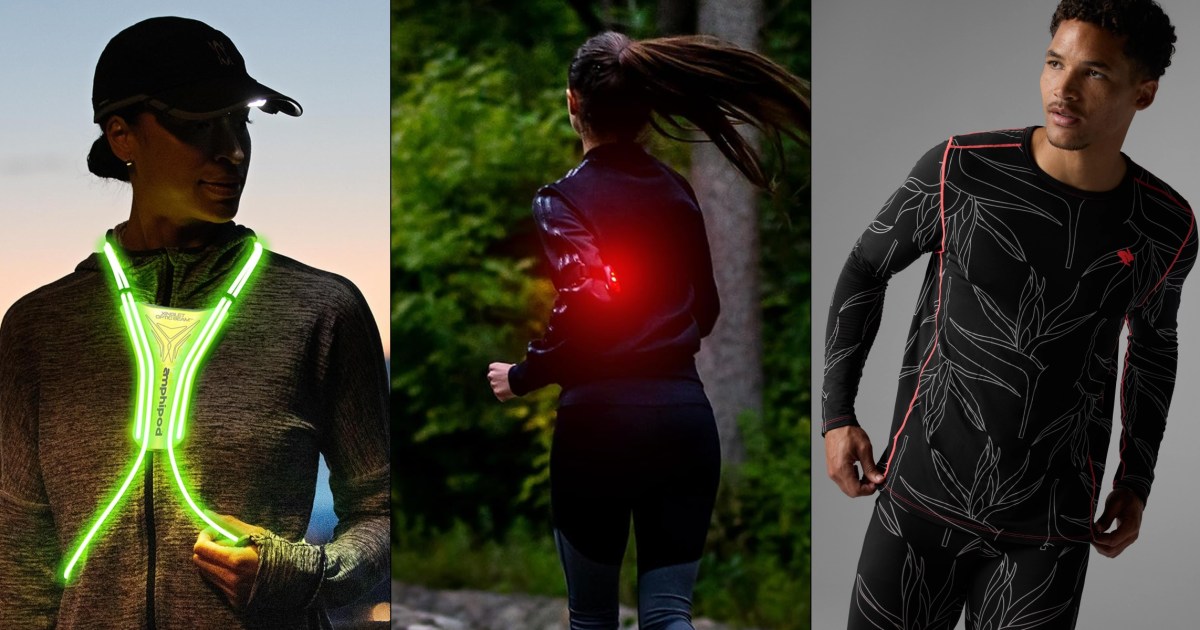
Experts advise combining reflective clothing with active lights for 360-degree visibility. Top picks include the GoxRunx Reflective Running Vest with Arm Bands ($13.99), which covers the torso and back with retroreflective material and includes adjustable arm bands. The Amphipod Xinglet Optic Beam Max LED Vest ($60) offers up to 23 hours of flashing light and eight light modes. For a belt option, the FlipBelt Reflective Zipper Running Belt ($58) features retroreflective material around the entire exterior and multiple storage pockets. Clip-on lights like the Apace Vision Clip-On LED Safety Light ($21.97 for two) attach to clothing and are visible from over 1,000 feet. The Amphipod Swift-Clip Luminator Cap Headlamp ($49.50) clips onto any hat brim, weighs under 2 ounces, and provides up to 6.5 hours of light. The YunTuo LED Beanie ($9.99) integrates a rechargeable LED light visible up to 30 feet. The Rabbit Low Light Layer One shirt ($70) uses a large retroreflective pattern across front and back.
How to Choose Reflective Running Gear
Experts recommend prioritizing 360-degree visibility with retroreflective material on the torso, back, arms, legs, and joints. Large surface areas of retroreflective material are more effective than small logos. Light, bright colors blend into darkness less than dark shades. Gear should be comfortable and not distract from running. Care instructions must be followed to prevent damage to reflective materials.
Safety Tips for Running in Low Light
Beyond gear, experts advise against multitasking with headphones or phones. Runners should carry a fully charged phone and identification, choose familiar routes practiced in daylight, run facing oncoming traffic, and never assume drivers see them. Telling someone the route and expected return time, and running with a buddy, further enhances safety.
Reflective vs. Fluorescent Gear: Key Differences
Reflective gear bounces artificial light back to its source for visibility in darkness. Fluorescent gear uses neon colors that absorb UV light and re-emit it for daytime visibility. Some gear combines both for round-the-clock use.