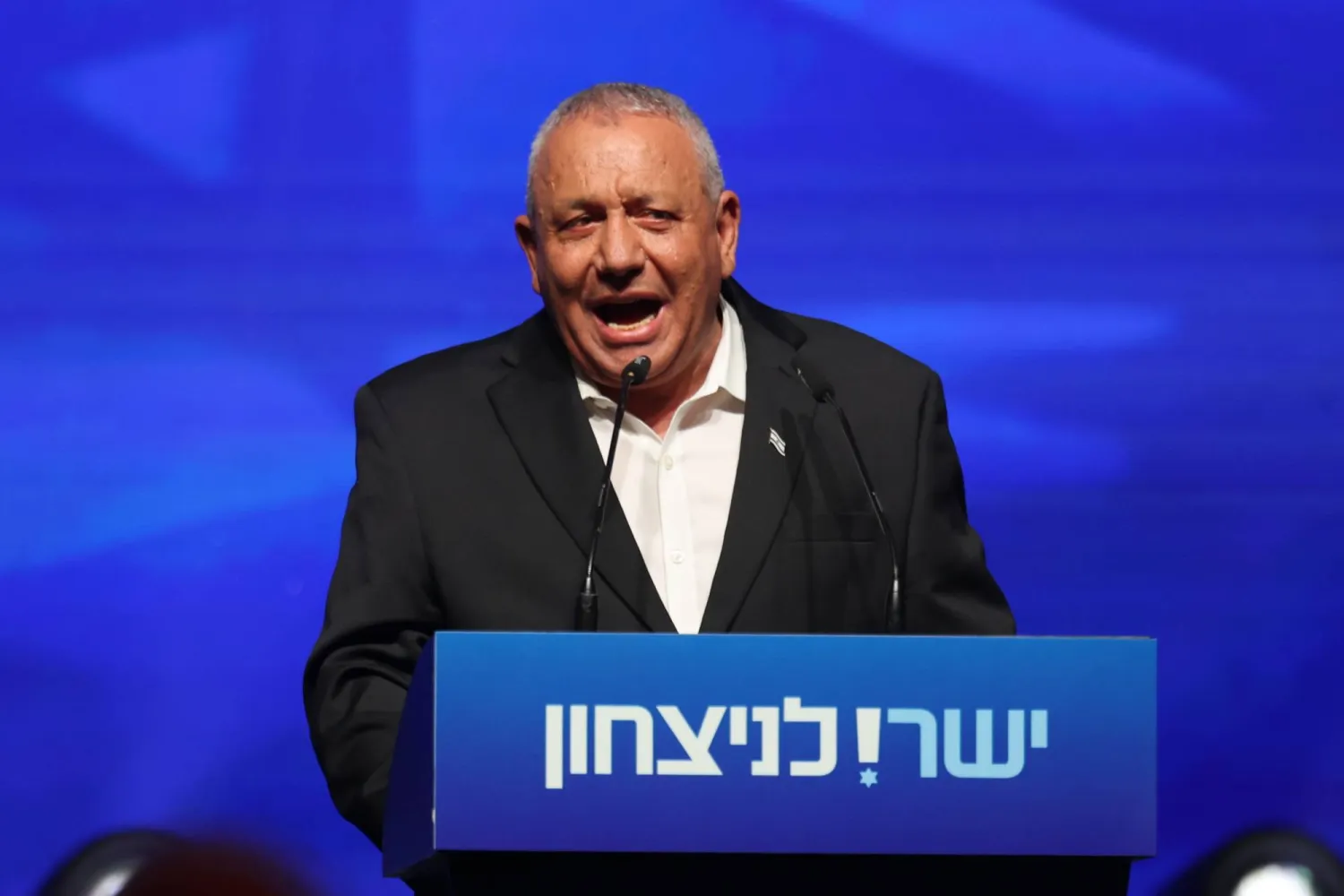
By Basant El-Faramawy
Former Israeli military chief Gadi Eisenkot has emerged as the leading challenger to longtime Prime Minister Benjamin Netanyahu following Tuesday's election, with his centrist Yashar party and opposition allies holding a narrow path to power if they can form a coalition with Arab-led parties.
Election results and coalition arithmetic
Preliminary results from Israel's elections commission show Netanyahu's Likud party and its allies projected to win 53 seats, while Eisenkot's Yashar bloc is close behind with 48 seats. Arab-led parties secured 19 seats. Neither bloc reaches the 61-seat majority required in the 120-seat Knesset, making coalition negotiations critical.
Challenges of partnering with Arab parties
Eisenkot has not ruled out cooperating with Arab parties, unlike Netanyahu and many Likud members. However, Yashar has demanded that Arab parties publicly endorse four principles: recognizing Israel as a Jewish and democratic state, designating Hamas as a terrorist organization to be disarmed, and ending draft exemptions for ultra-Orthodox Jews and Palestinian citizens. Arab party leaders have yet to accept these conditions, and time is short before a potential second election.
Eisenkot's background and personal losses
The 66-year-old Eisenkot, raised by Moroccan-Jewish immigrants, spent four decades in the military and served as chief of staff. His 25-year-old son, Gal Meir Eisenkot, was killed in combat in Gaza, as were two of his nephews. These personal losses have bolstered his credibility among Israelis as a leader who understands the cost of war. He resigned from Netanyahu's war cabinet in June 2024, citing political interference in military decisions.
Platform: inquiry into Oct. 7 and draft reform
Eisenkot supports a state inquiry into the failures surrounding the Hamas attacks of October 7, 2023, which killed 1,200 people and led to the Gaza war. He insists on mandatory military service for ultra-Orthodox Jews and backs evacuating unauthorized settler outposts in the West Bank while maintaining support for established settlements.
Security doctrine and stance on settlements
Eisenkot is credited with formulating the "Dahiyeh Doctrine," advocating disproportionate force against any entity that attacks Israel. He supports Israeli military operations in Gaza, Lebanon, and Iran, but says he would seek to reduce tensions with Palestinians in the West Bank and follow Trump's plan for Gaza. His platform blends hawkish security policies with a call for national unity.