By Islam El-Sakka
Indian and Chinese troops have faced off along the disputed eastern border in Arunachal Pradesh, the chief of India's border police acknowledged this week, providing the first official confirmation of tensions previously reported by The Independent.
Official confirmation of face-offs
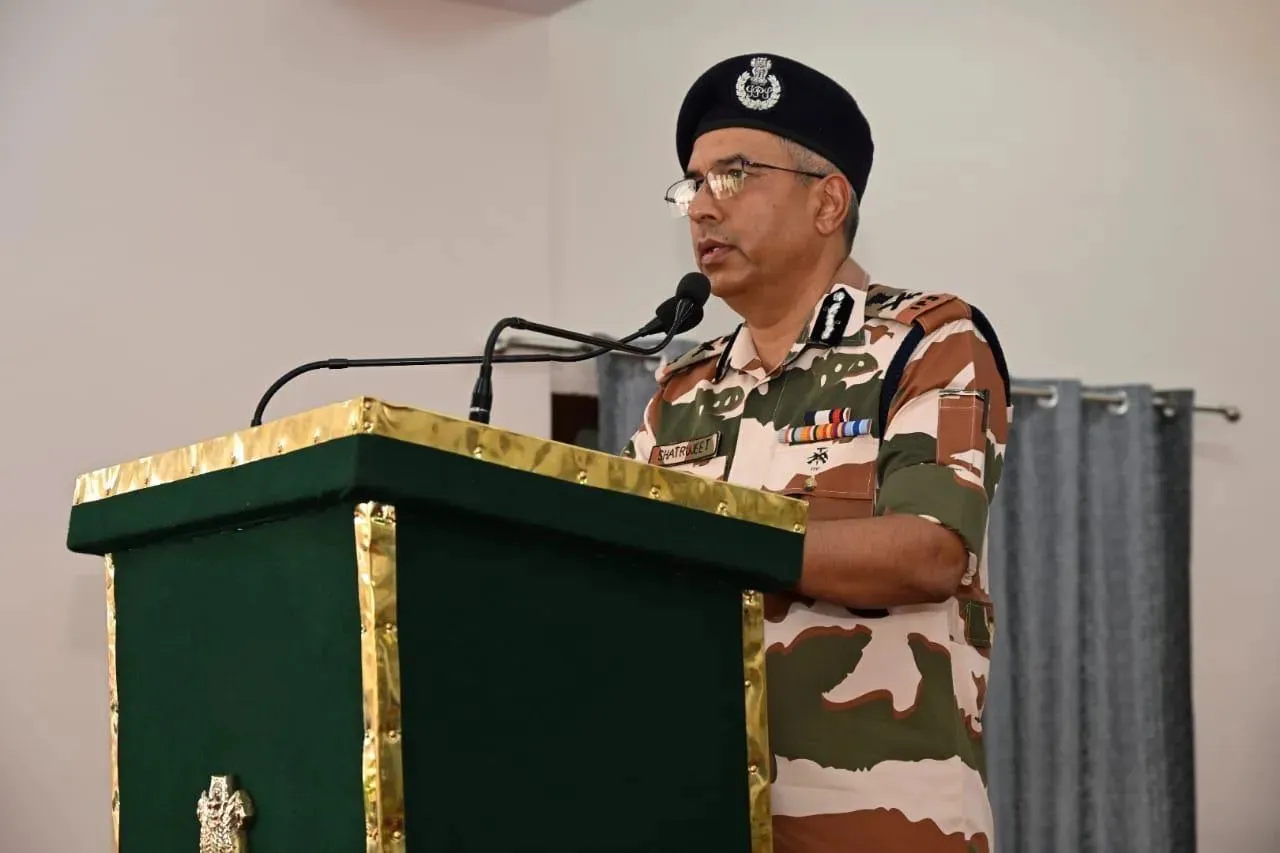
Shatrujeet Singh Kapur, director general of the Indo-Tibetan Border Police (ITBP), said face-offs began in July at several locations in Arunachal Pradesh and are continuing. He made the remarks at a gathering of officers in Rajasthan state, just days before his scheduled retirement on 31 October.
Equipment concerns and drone warfare
Kapur warned that ITBP weapons are 50 years old and urgently need modernisation, noting India may not compete with China through traditional methods given Beijing's extensive investment in modern weapons and infrastructure. He cited the use of drones by Ukraine against Russia and by Iran against the US as examples of how smaller forces can challenge larger powers.
Historical context and recent clashes
India and China share a 3,440km (2,100-mile) de facto border known as the Line of Actual Control (LAC), which runs through remote Himalayan terrain and has been a source of contention since the 1962 war. The last major escalation occurred in June 2020 when a bloody clash in Galwan Valley killed 20 Indian and four Chinese soldiers. Both sides have since de-escalated, reaching an eight-point consensus in 2024 and continuing senior military commander-level talks.
Satellite evidence and village impact
Satellite imagery obtained by The Independent last month showed new Chinese infrastructure along and near the disputed frontier, including roads, buildings, cleared areas and helipads. Fact-finding missions reported Chinese troops have advanced into Indian-claimed territory around Taksing, Gelemo and Maza in Upper Subansiri district, denying villagers access to ancestral grazing grounds, hunting areas and forests.
Specific confrontation near Taksing
The face-off mentioned by Kapur occurred near Taksing in late July. After an initial withdrawal, the Chinese army returned in larger numbers and pitched tents at an elevation within 6km to 7km of India's perception of the LAC.
Political fallout
The opposition Congress party sharply criticised the Modi government's silence. Senior leader Jairam Ramesh said the prime minister's "clean chit" to China after the 2020 Galwan clash had left India paying a price. Congress president Mallikarjun Kharge called the revelation "deeply alarming." India's foreign ministry spokesperson Randhir Jaiswal said both countries were engaged in military and diplomatic talks but gave no details. A Chinese foreign ministry spokesperson stated China had "consistently and strictly adhered to relevant agreements" and conducted "normal patrol and management activities."
Expert assessment
Professor Srikanth Kondapalli of Jawaharlal Nehru University said border transgressions occur regularly, numbering between 380 and 430 annually — almost one a day. He explained these can be accidental due to differing perceptions of the undefined LAC or deliberate attempts to assert control, with potential to escalate into deadly clashes like Galwan.