By Ahmed Abdelsalam
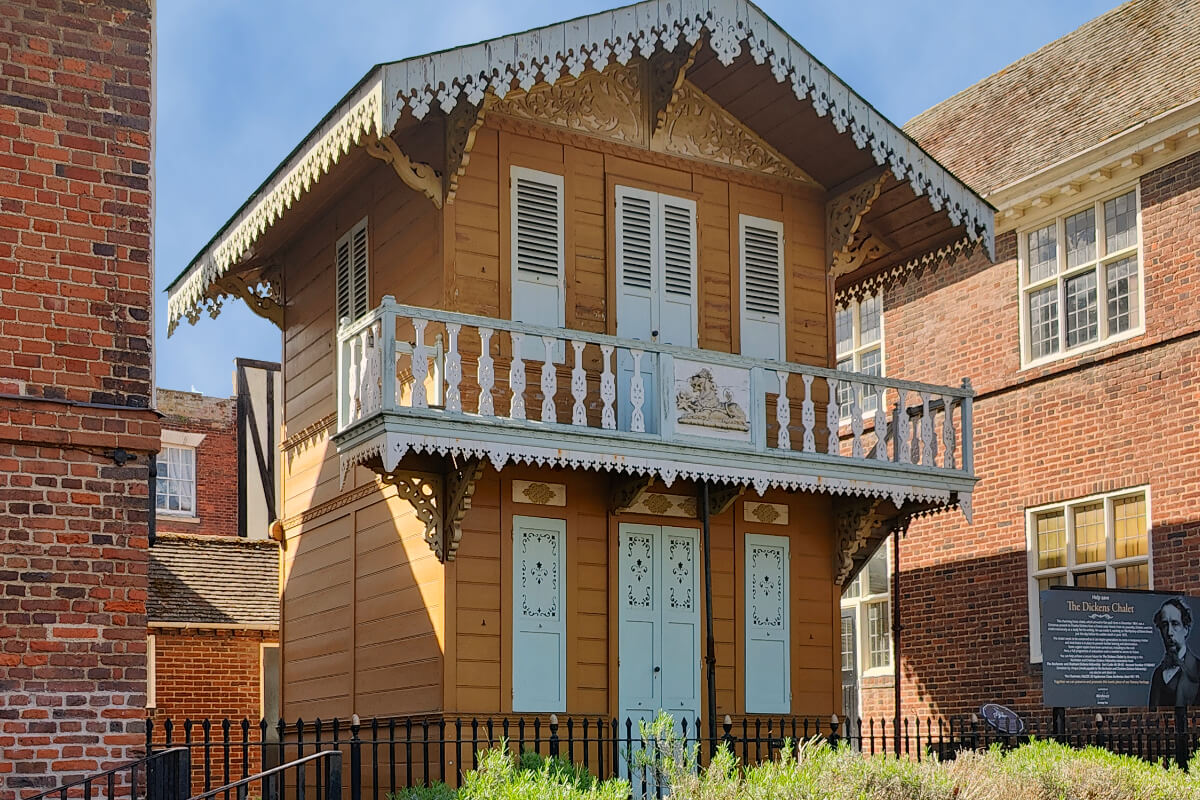
Historic England has added the writing chalet where Charles Dickens penned several of his later novels to its latest Heritage at Risk Register, highlighting concerns over decaying timbers and structural instability. The register now includes close to 5,000 buildings, archaeological sites, parks, gardens, and protected wrecks deemed at risk of neglect, decay, or inappropriate change.
Dickens Chalet Faces Structural Decay
The two-storey Swiss chalet, originally a Christmas gift to Dickens in 1864, once stood in his garden at Gads Hill Place before being moved to Eastgate House in Rochester, Kent, in the 1960s. The Grade I-listed building served as a quiet workspace for novels including Our Mutual Friend, The Uncommercial Traveller, and the unfinished The Mystery of Edwin Drood. Public access is currently prevented due to its poor condition. Medway Council has secured a £240,000 grant from the National Lottery Heritage Fund, supplemented by £40,000 in council funding and £5,000 from the Dickens Fellowship, to develop restoration plans and a new garden setting.
Hall's Croft Requires Major Conservation
Grade I-listed Hall's Croft in Stratford-upon-Avon, Warwickshire, where William Shakespeare's daughter Susanna lived with her husband Dr John Hall, has also been added to the register. The 17th-century building faces major conservation challenges, including damage from a vehicle collision at its front. A £1 million donation from playwright Ken Ludwig has funded initial work, but further funds are needed for the next phase, Historic England said.
Hastings Castle Threatened by Coastal Erosion
Hastings Castle in East Sussex, one of the first three castles built by William the Conqueror and depicted in the Bayeux Tapestry, has been listed due to vulnerability from its exposed setting and ongoing coastal erosion.
Moorland Fire Damages Historic Monuments
A large area of wildlife-damaged moorland in Fylingdales, North Yorkshire, has been added after a blaze last year caused damage to 20 scheduled monuments, six listed buildings, and natural landscapes including important peatlands.
Several Sites Saved and Removed from Register
In positive developments, a number of historic sites have been removed from the register after successful conservation. These include the Jenner Hut in Berkeley, Gloucestershire, where Edward Jenner carried out the first smallpox vaccinations in 1796, saved with National Lottery Heritage Fund support. Also removed are Newlyn Harbour in Cornwall, Loftus conservation area in Cleveland and Redcar, the Grade II*-listed Severn Wharf Building in Shropshire, and Wolterton Hall Park and Gardens in Norfolk.
Government Commits to Heritage Protection
Heritage minister Baroness Twycross emphasized the importance of protecting heritage sites at the heart of communities, citing the £1.5 billion Arts Everywhere Fund supporting efforts to save more than 1,000 arts venues, museums, libraries, and heritage buildings across England. She noted the register serves as a reminder of pressures from ageing buildings, structural deterioration, and extreme weather impacts.