
By Salma El-Sakka
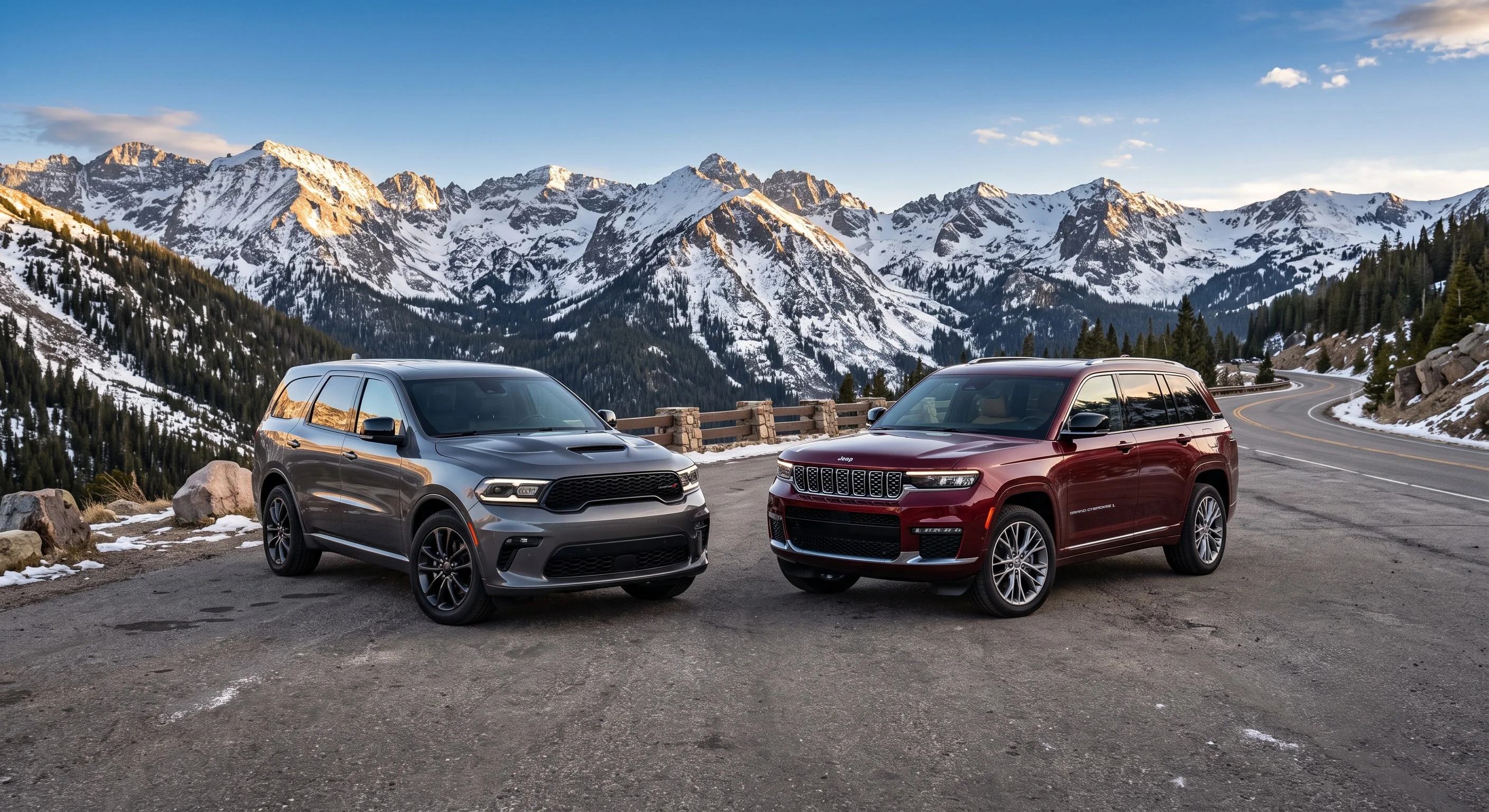
Edmunds automotive experts have compared the Dodge Durango and Jeep Grand Cherokee L, two three-row SUVs with shared corporate roots and similar pricing but distinct target buyers.
Comfort, cargo and character
The Grand Cherokee L is about 4 inches longer and 2 inches wider than the Durango, providing more elbow and legroom for passengers. While the Durango claims more third-row legroom on paper, its second-row seats are fixed and its low-mounted third row creates a cramped, knees-up environment. The Jeep features a sliding second row that eases third-row access and opens up legroom. Edmunds testers found the Grand Cherokee L delivers a smoother ride over bumps and more comfortable front seats for long drives. Both SUVs offer identical 17.2 cubic feet of cargo space behind the third row, with similar capacity when seats are folded.
Power, performance and mpg
The Grand Cherokee L comes standard with a 293-horsepower V6, which Edmunds found underpowered for the SUV's size, reaching 60 mph in 8.6 seconds. An available 324-horsepower turbocharged four-cylinder improves acceleration by about one second and raises fuel economy to an EPA-estimated 23 mpg combined, but is reserved for mid-tier trims starting near $50,000. The Durango starts with a 360-horsepower V8 rated at 17 mpg combined, progressing to a 475-horsepower V8 and a 710-horsepower supercharged V8. Edmunds tested the mid-tier V8 Durango, which sprinted to 60 mph in 4.9 seconds. The Durango's V8 enables up to 8,700 pounds of towing capacity, compared to the Jeep's 6,200-pound limit. However, the Grand Cherokee L offers superior ground clearance, low-range gearing, and off-road hardware for dirt roads and rocky trails.
Technology features
Both models include standard 10-inch touchscreens with wireless Apple CarPlay and Android Auto. The Grand Cherokee L adds a 10.3-inch digital gauge cluster and options such as a 12.3-inch touchscreen, wireless phone charging, a front passenger display, and a digital rearview mirror. The Durango offers an available 19-speaker Harman Kardon audio system but fewer advanced features. The Jeep includes adaptive cruise control, lane keeping, and blind-spot warning as standard, with upper trims offering surround-view and off-road cameras, automated parking, and hands-free driving. The Durango provides only standard blind-spot warning and parking sensors, with forward collision warning and automatic emergency braking optional.
Price and value
The Grand Cherokee L starts at $43,725 including destination fees, while the Durango starts at $45,870. Edmunds concludes the Jeep delivers better value with more modern features, a more comfortable interior, and proven off-road ability. The Durango counters with V8 power and nearly four tons of towing capacity, along with muscle-car charm rarely found in modern SUVs outside luxury European brands.
Edmunds verdict
Edmunds says the Jeep's features, off-road ability, and respectable towing make it the more polished choice for buyers who do not need to tow large boats or trailers. The Durango's muscle-car character wrapped in a three-row SUV remains irresistible for those prioritizing speed and attitude.
