By Salma El-Sakka
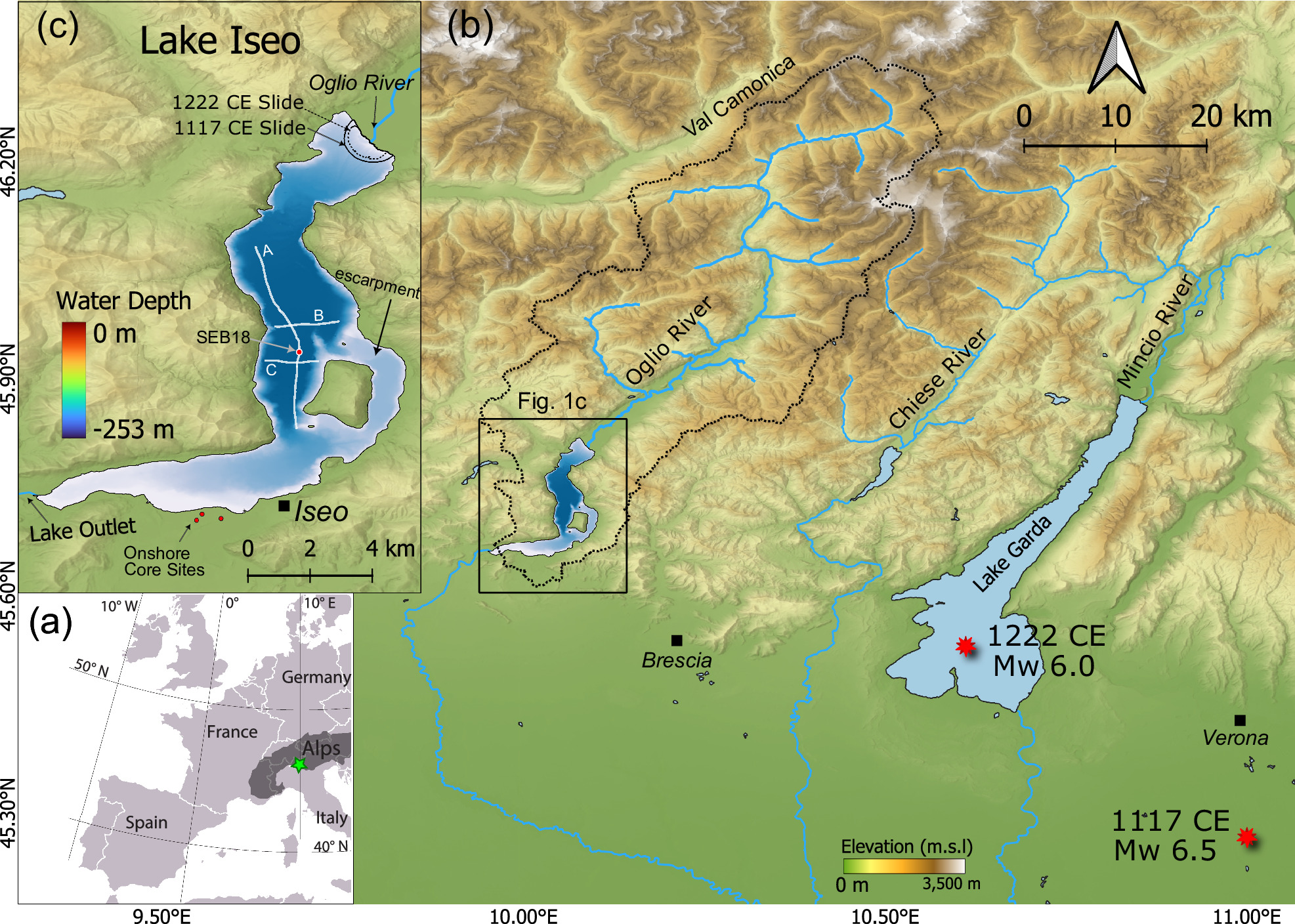
A new study published in Nature Communications reveals that human activity amplified the threat of catastrophic lake tsunamis in medieval Europe, a hazard that persists today. Researchers found that centuries of farming, forest clearing, and grazing around Lake Iseo in Lombardy, Italy, tripled sediment flow into the lake, creating unstable underwater slopes.
Sediment Accumulation from Farming
Since Roman times, agricultural practices exposed valley slopes to erosion, sending vast amounts of sediment into Lake Iseo. This buildup steepened the underwater delta front, priming it for collapse.
Earthquakes Triggered Massive Waves
Two major earthquakes, in 1117 AD and 1222 AD, dislodged the accumulated sediment. The 1117 quake moved about 62 million cubic meters of material, generating tsunami waves up to 50 meters high that flooded the Oglio plain up to 2.7 kilometers inland. The 1222 event produced waves around 13 meters high.
Ongoing Threat to Populated Lakes
Computer simulations show the 1117 tsunami reached nearby shores in less than a minute, too fast for any warning. Sediment accumulation continues in Lakes Garda and Como as well, where more than 370,000 people now live. Scientists warn that another collapse could send a large wave to northern shores with virtually no warning time.