By Karim Hammam
Several major UK rules, laws, and policy changes are set to take effect in November 2026, affecting dog ownership, online content, transport, housing, vehicle emissions, employment rights, and student visas.
Stricter supervision for banned dog breeds
From 1 November, owners of banned breeds such as the XL Bully, Pit Bull Terrier, Japanese Tosa, Dogo Argentino, and Fila Brasileiro are prohibited from leaving a child under 12 unsupervised with the dog in any domestic or private setting. Supervision must be in person by an adult aged 18 or over; baby monitors or cameras are not acceptable substitutes. Penalties for unlawful possession include an unlimited fine, up to six months in prison, and destruction of the animal.
Ban on certain pornography
Effective 6 November, pornography depicting strangulation or suffocation, sex between relatives or those pretending to be related, and material where a person pretends to be under 16 will become illegal. Possessing or publishing such content carries penalties of up to two years’ imprisonment for strangulation or incest depictions, and up to three years for material involving a person who is or appears to be under 16.
Free bus pass age aligned with state pension rise
Eligibility for a free older person’s bus pass in England will rise in line with the state pension age, which is gradually increasing from 66 to 67 between May 2026 and April 2028. Those turning 66 with birthdays between 6 November and 5 December 1960 will be affected by the incremental rise. Existing pass holders and those who already reached the previous threshold will not see changes.
Airbnb limits host rules and cleaning fees
Starting 20 November, Airbnb hosts may set only seven house rules and can add reasonable requests. Guests who pay a cleaning fee will not be required to perform extra housekeeping tasks such as washing dishes or stripping beds. The changes apply to all reservations booked on or after that date.
Awaab’s Law extended to private renters
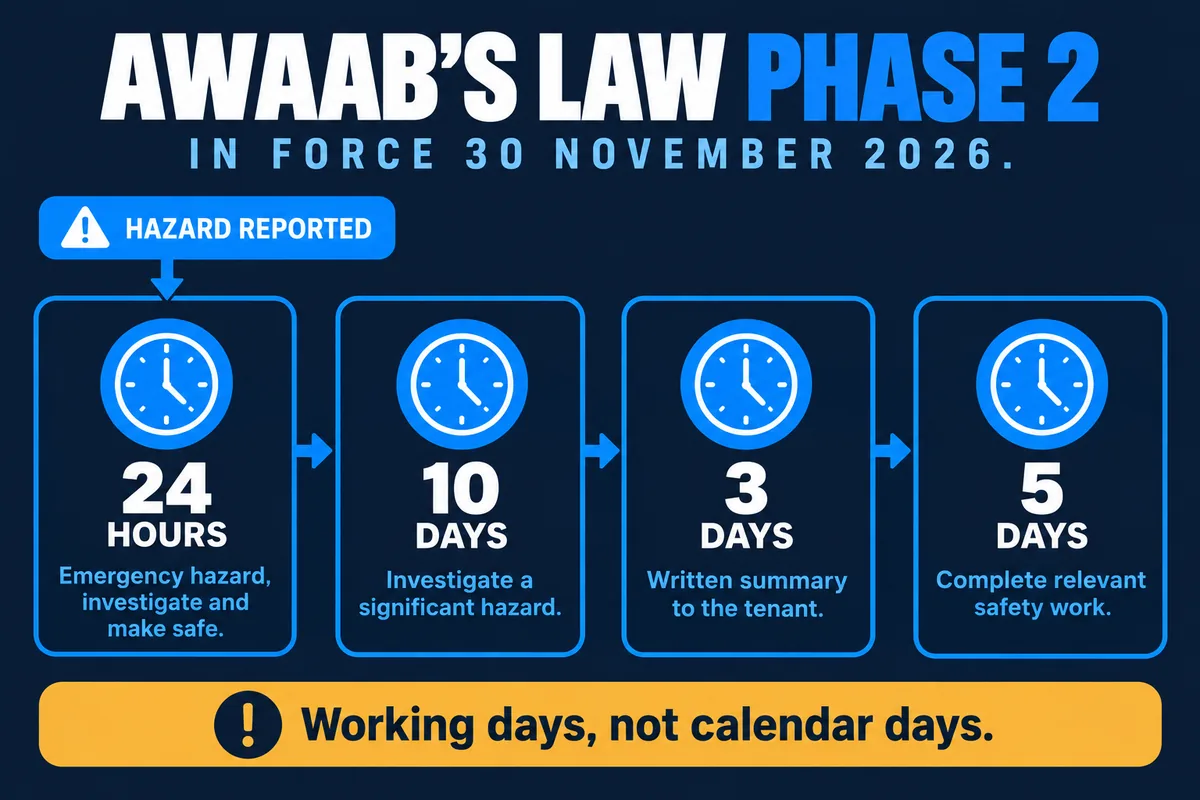
From 30 November, Awaab’s Law — named after two-year-old Awaab Ishak, who died in 2020 after prolonged exposure to severe damp and mould — will expand beyond social housing to cover private rentals. Landlords must investigate and address a wider range of hazards, including excess heat and cold, fire and electrical risks, structural issues, and domestic pests or hygiene problems, within legally set timeframes.
Euro 7 vehicle emission standards introduced
The EU’s Euro 7 standard, the first to regulate non-exhaust emissions such as brake and tyre particles and to include electric vehicle battery testing, will apply to new light-duty vehicle models from 29 November 2026 and to new heavy-duty models from 29 May 2028. The standard covers petrol, diesel, hybrid, and electric cars, vans, lorries, and buses.
Employment tribunal time limit extended in Scotland
As part of UK-wide employment reforms, the time limit for bringing a claim to an employment tribunal in Scotland will increase from three months to six months, effective 9 November 2026. The wider UK change took effect on 1 October 2026.
Student visa financial requirements increased
From 30 November, international students applying for a UK student visa must show higher maintenance funds. For study in London, the monthly requirement rises from £1,529 to £1,570 (9-month maximum from £13,761 to £14,130). Outside London, the monthly amount increases from £1,171 to £1,203 (9-month maximum from £10,539 to £10,827).