By Salma El-Sakka
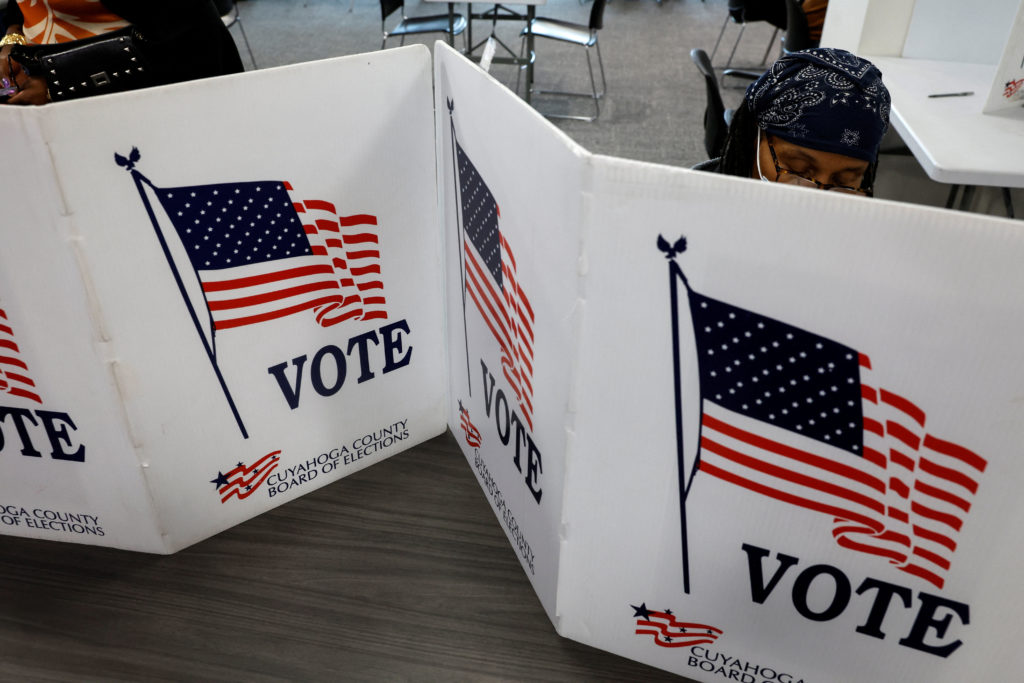
Millions of Americans are voting in the 2026 midterm elections that will shape the remainder of President Donald Trump's term and determine whether Republicans or Democrats control Congress. The outcome hinges on competitive races across the Senate and House of Representatives, with final results potentially taking hours, days, or even weeks to be projected.
When Will Results Be Projected?
First results begin after 18:00 EST (23:00 GMT) from safe Republican states Kentucky and Indiana and safe Democratic state Vermont. These early returns offer little indication of the overall outcome. Analysts will focus on competitive races throughout the night, with several tight Senate contests in the Eastern Time zone — Ohio (polls close 19:30 EST) and Maine (20:00 EST) — providing early clues about the electorate's mood. Media outlets may "call" races when they project a candidate has an insurmountable lead, but closely fought states could delay projections significantly.
Comparison With 2022 Midterms
In 2022, control of Congress remained uncertain a day after the election. Republicans were favored to win the House, but the Senate was on a knife-edge. CBS News projected a Republican House majority on 17 November, while a crucial Nevada Senate race took four days to count, giving Democrats 50 seats and Senate control via Vice President Kamala Harris's tie-breaking vote. A Georgia runoff decided the final Senate seat on 7 December.
Key Senate Races to Watch in 2026
The Cook Political Report identifies six toss-up Senate races: Alaska, Kansas, Iowa, Maine, Ohio, and Texas — all currently held by Republicans. Democrats need to win three of these plus five leaning Democratic seats to reach a 51-seat majority. Notable contests include Texas, where former teacher James Talarico challenges Republican Attorney General Ken Paxton, a close Trump ally, and Michigan, where left-wing outsider Abdul El-Sayed faces former FBI agent Mike Rogers in a race recently reclassified as "leans Democrat."
House Battlegrounds
Republicans hold a slim 218-seat House majority, plus one independent who votes with them. The most closely watched House races are in East Coast districts, including New York's 17th District, Pennsylvania's 8th District, and Virginia's 1st District, according to the Cook Political Report.
Poll Closing Schedule
An initial voter poll releases at 17:00 EST (22:00 GMT). Polls then close in stages: 18:00 EST in Kentucky and Indiana; 19:30 EST in Ohio (Senator Jon Husted vs. Sherrod Brown); 20:00 EST in Maine (Senator Susan Collins vs. Troy Jackson) and most of Kansas and Texas; 21:00 EST in Iowa and remaining parts of Kansas and Texas; and 01:00 EST in Alaska, where Democrat Mary Peltola faces incumbent Republican Senator Dan Sullivan amid ballot controversy over a second candidate with the same name.
Vote Counting Process
Each state administers its own elections with varying rules. Some states like Florida process early and mail ballots before election day, while others begin tabulating only on 3 November. Local officials verify, process, and count votes in a process called canvassing. Most states require post-election audits with manual counts checked against machine totals, though full hand counts are generally reserved for recounts. Partisan observers may watch the count and, in some states, raise formal challenges.
Potential Delays and Challenges
Tight races, mail-in ballots, and state-specific rules can prolong counting. More than 30 states allow pre-election processing of mail ballots, but others do not. California accepts ballots postmarked by election day that arrive within seven days. Alaska's ranked-choice voting and ballot controversies could extend tabulation and invite legal challenges.
Certification and Inauguration
After all votes are counted and any recounts completed, results are certified locally, then statewide. The governor signs certifications for House and Senate winners to be sent to Congress. Candidates in close races may request recounts, and some states trigger automatic recounts within certain margins. Legal contests alleging irregularities can be filed, with each chamber having final authority over seating its members. Outgoing members leave office on 3 January; because that date falls on a weekend, new members may take office the same day unless Congress sets a different date.