By Fatma Younis
As the United States approaches next Tuesday's midterm elections, the Democratic Party is grappling with a deepening identity crisis that pits its progressive flank against its centrist establishment. While historical trends and President Donald Trump's low approval ratings favor Democratic gains, the party's national unfavorability ratings remain high, raising questions about its long-term cohesion and direction.
Generational Divide Over Party Direction
The divide is illustrated by voters like James Stevens, a 24-year-old democratic socialist from Georgia who advocates for policies aligned with the Democratic Socialists of America, including anti-Zionism, removing corporate money from politics, and government-run healthcare. His mother Tamara, a longtime Democrat who switched parties after Barack Obama's rise, supports reproductive rights and incremental change but identifies as a Zionist. Both want Democrats to win Congress, but they fundamentally disagree on what the party should stand for.
Healthcare as a Battleground
Healthcare has emerged as a primary arena for the intra-party fight. Progressive candidates and groups like Justice Democrats push for "Medicare for All," while establishment figures such as Neera Tanden argue that many voters want universal coverage but also wish to retain private insurance. Polls show a majority of Democrats now favor a single-payer system, though most Republicans oppose it. Rising out-of-pocket costs have made the issue more salient across the electorate.
Israel-Gaza Split Deepens
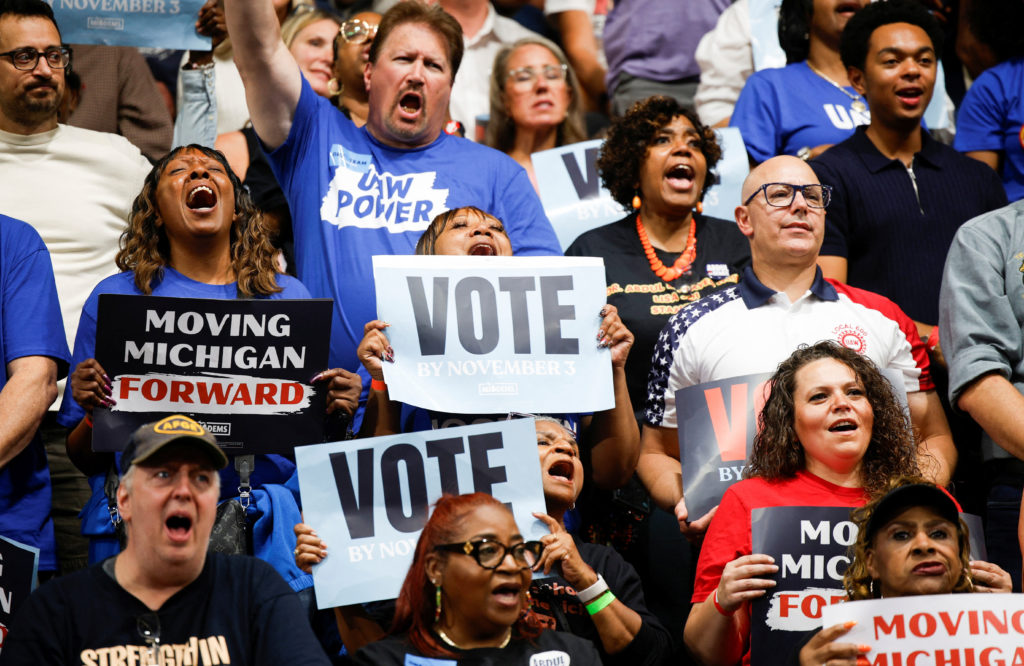
The conflict in Gaza has become a litmus test within the party. In Michigan, progressive candidate Abdul El-Sayed, a vocal critic of Israel's actions, won a primary over establishment objections, energizing Arab-American voters who felt betrayed by the Biden administration. Conversely, Jewish Democrats like Zach Nessel fear rising antisemitism and insist that support for Israel is tied to Jewish safety in the U.S., warning they may become politically homeless if the party moves toward anti-Zionism.
Centrists vs Progressives in Key Races
Analysts are split on which wing will deliver victories. Centrist strategist Jim Kessler points to moderate candidates in swing states like North Carolina, Alaska, Texas, Iowa, and Kansas as the key to a Senate majority. Meanwhile, the Cook Political Report's Carrie Dann notes that El-Sayed's performance in a purple state could validate a progressive model that activates new voters, particularly young people.
Corruption Emerges as Unifying Issue
Despite ideological fractures, corruption has resonated broadly with voters in both parties. In Georgia, Senator Jon Ossoff has made anti-corruption messaging central to his re-election campaign, drawing large crowds at a rally with former President Obama. Early voters in Republican and Democratic counties alike cited corruption as a top concern, and analysts say it has become a central issue of the election cycle.
Post-Election Jostling for 2028
Regardless of Tuesday's outcome, the fight over the Democratic brand is expected to intensify immediately. Ruy Teixeira of the American Enterprise Institute predicts fierce factional battles to claim credit for any wins, which will feed directly into jostling for the 2028 presidential nomination. The party's challenge, he says, is to deliver tangible economic improvements and affordability after repeatedly promising to do so.