By Basant El-Faramawy
Renowned oceanographer Sylvia Earle is calling for a complete halt to krill fishing near Antarctica as representatives from 26 governments, including the United States, China, and Russia, negotiate a potential expansion of the fishery this week.
No sustainable extraction possible
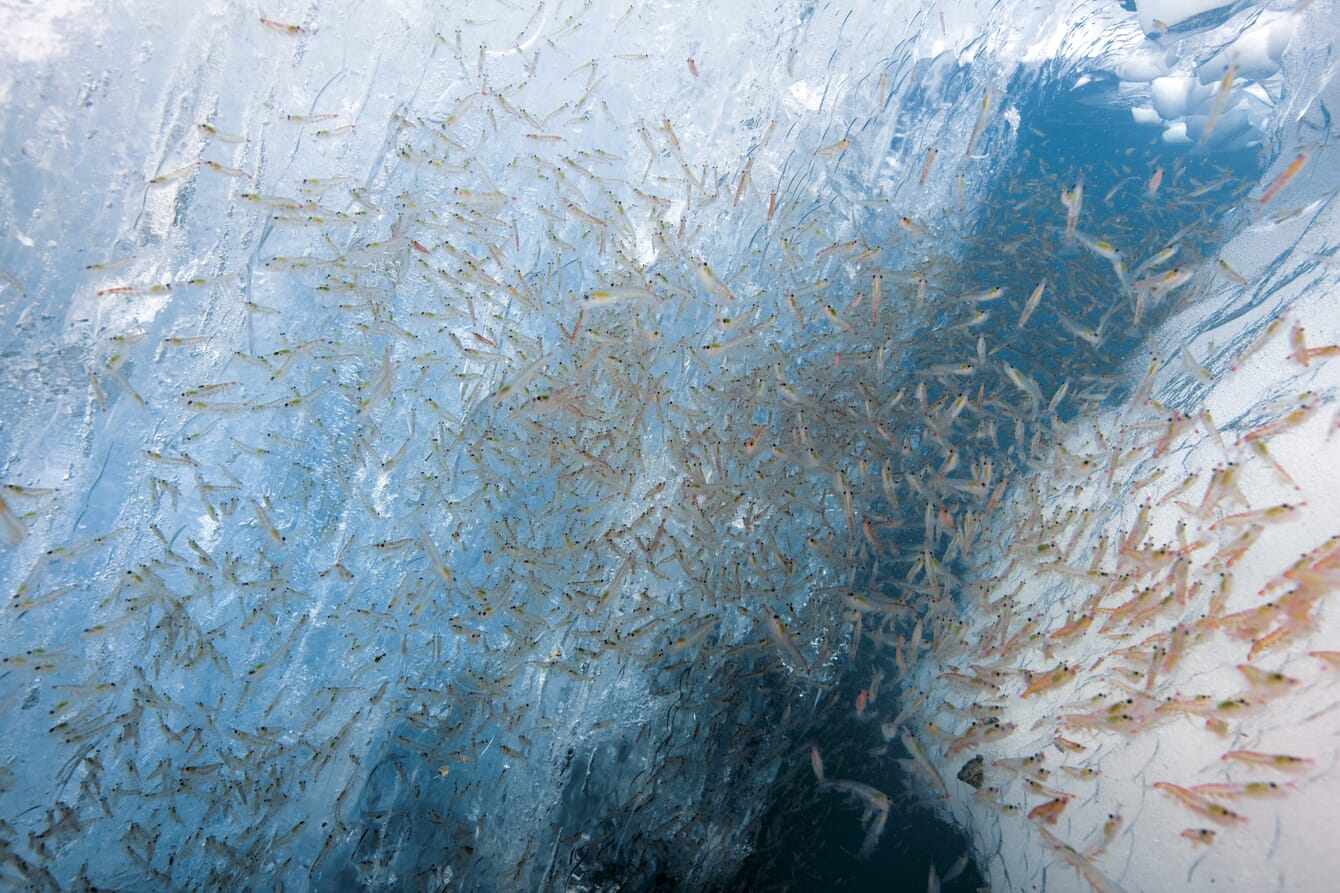
“There is no sustainable extraction of krill in Antarctica possible, period,” Earle said in an interview in Rome. The 91-year-old former chief scientist of the U.S. National Oceanic and Atmospheric Administration emphasized that krill are critical to the entire Antarctic ecosystem, supporting whales, fish, birds, seals, and sea lions.
CCAMLR deadlock over expansion
The Commission for the Conservation of Antarctic Marine Living Resources (CCAMLR) is meeting in Australia to consider an industry-backed plan to increase krill catches. Environmentalists and CCAMLR’s own scientific committee argue that any expansion must be paired with a long-delayed marine protected area near the Antarctic Peninsula, first proposed by Argentina and Chile a decade ago.
Early season closures
Krill fishing around Antarctica shut down early in August for the second consecutive year after trawlers, mostly from Norway and China, reached a 620,000 metric ton limit before the season’s scheduled end. The crustaceans are primarily harvested for aquaculture feed and omega-3 supplements, though alternative sources exist.
Climate role and industry response
Research shows krill play a significant role in removing carbon dioxide from the atmosphere, but warming oceans are pushing populations toward cooler waters near the South Pole. Aker BioMarine, the Norwegian company that harvests about two-thirds of the krill catch, supports a proposal to spread fishing effort more evenly and backs the creation of a protected area. Its chairman, Matts Johansen, cites UN Food and Agriculture Organization assessments supporting the fishery’s sustainability.