By Basant El-Faramawy
India's border police chief has officially confirmed that Indian and Chinese troops engaged in face-offs at multiple locations along the disputed frontier in Arunachal Pradesh starting in July, marking the first public acknowledgment of renewed tensions since a 2024 de-escalation agreement.
ITBP chief confirms face-offs
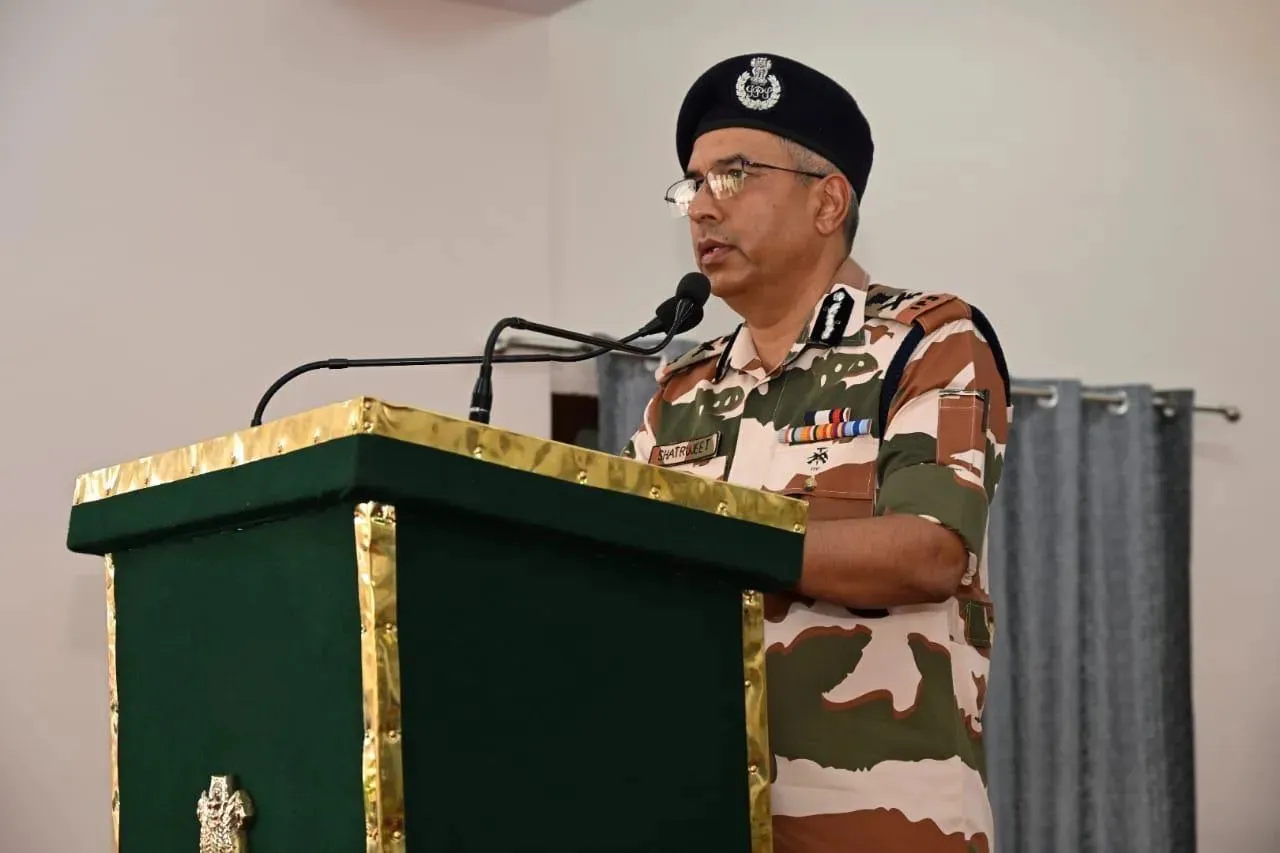
Shatrujeet Singh Kapur, director general of the Indo-Tibetan Border Police (ITBP), told a gathering of officers in Rajasthan that "a face-off happened at several locations" in the northeastern state, which Beijing claims as part of southern Tibet. The confrontations began in July near Asaphila, close to Taksing in Upper Subansiri district. After an initial withdrawal, Chinese troops returned in larger numbers and established tents within 6 to 7 kilometres of India's perception of the Line of Actual Control (LAC).
Equipment concerns and modernization gap
Kapur, who retires on 31 October, warned that ITBP weapons are 50 years old and urgently need modernization. He said India may not compete with China through traditional methods given Beijing's extensive investment in modern weapons and infrastructure, citing drone warfare in Ukraine and Iran as examples of how smaller forces can challenge larger powers.
Satellite imagery reveals Chinese buildup
Satellite images obtained last month show new Chinese infrastructure along and near the disputed frontier, including roads, buildings, cleared areas and helipads. Fact-finding missions reported Chinese troops have advanced into Indian-claimed territory around Taksing, Gelemo and Maza in Upper Subansiri district. The Indian Army had previously denied such claims.
Villagers lose access to ancestral lands
Border residents and tribal communities say they have been denied access to traditional yak-grazing grounds, hunting areas and forests used for generations. The 3,440-kilometre LAC remains ill-defined, running through remote Himalayan terrain where differing perceptions have fueled disputes since the 1962 war.
Political criticism and official responses
The opposition Congress party sharply criticised Prime Minister Narendra Modi's government for silence on the issue. Senior leader Jairam Ramesh linked the situation to Modi's 2020 statement that no one had entered Indian territory after the Galwan Valley clash that killed 20 Indian and four Chinese soldiers. Congress president Mallikarjun Kharge called the revelation "deeply alarming." India's foreign ministry spokesperson Randhir Jaiswal said both sides were engaged in military and diplomatic talks. China's foreign ministry stated it "consistently and strictly adhered to relevant agreements" and conducted "normal patrol and management activities."
Expert analysis on border transgressions
Srikanth Kondapalli, professor of Chinese studies at Jawaharlal Nehru University, said transgressions occur regularly, numbering 380 to 430 annually — nearly one per day. He explained these can be accidental due to differing LAC perceptions or deliberate attempts to assert control, with potential to escalate into deadly clashes like the 2020 Galwan confrontation.