By Karim Hammam
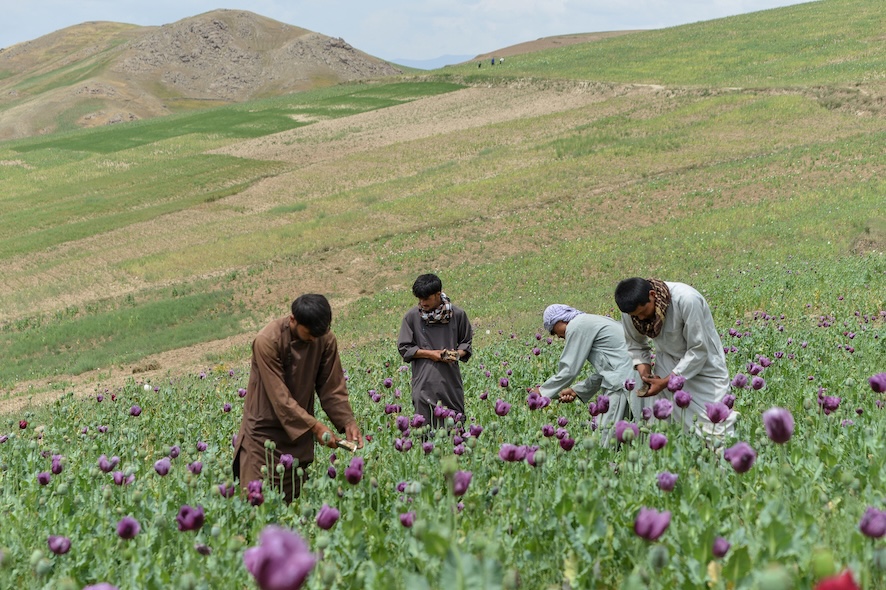
The United Nations Office on Drugs and Crime reported on Thursday a sharp rise in poppy cultivation and opium production in Afghanistan over the past year, marking the first significant increase since the Taliban imposed a narcotics ban in 2022.
Cultivation Surges 330%
The agency said cultivation rose 330% and production increased 400% compared to the previous year. Cultivation reached more than 43,000 hectares (106,000 acres) in 2026, up from 10,000 hectares (24,700 acres) a year earlier. Farmers are concealing small poppy plots within cereal fields or inside walled compounds to evade detection.
Poverty Drives Illicit Crops
UNODC Executive Director Monica Juma said the fourfold increase shows the difficulty of sustaining decreases when poor farmers have no alternatives to feed their families. She called on the Taliban authorities and the international community to work together by investing in livelihoods, farming infrastructure, and market access.
Taliban Response and International Role
Foreign Minister Amir Khan Muttaqi described the fight against narcotics as one of the Taliban administration's greatest achievements, but acknowledged the international community has a role in keeping the drug issue under control. He emphasized that effective action requires shared responsibility, including support for alternative livelihoods, addiction treatment, and enhanced cooperation against trafficking networks.