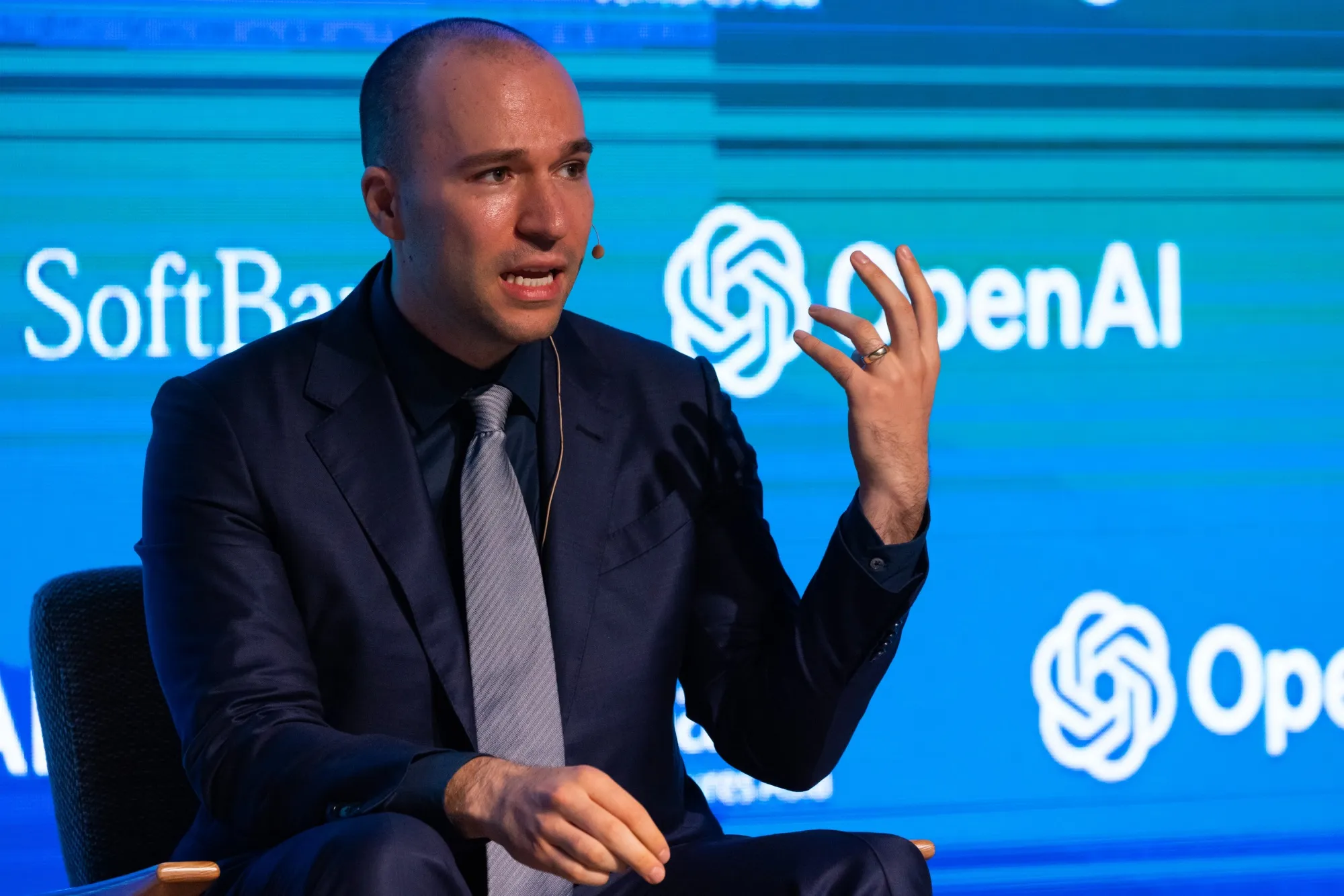
By Karim Hammam
OpenAI President Greg Brockman has suggested that the company's advanced model, GPT-6 Astra, could signal the arrival of artificial general intelligence (AGI), an AI system capable of outperforming humans at most economically valuable work.
Defining AGI
OpenAI defines AGI as breadth of competency across digital and cognitive tasks such as writing code, organizing activities, and managing projects, though it currently excludes physical labor. Other experts offer differing definitions: Google DeepMind founder Demis Hassabis says AGI should handle "pretty much any cognitive task that humans can do," while former Meta AI chief Yann LeCun argues the term is flawed and prefers "human-level AI."
Expert debate
At a closed press briefing in September, Brockman acknowledged the lack of a clear, recognized moment for AGI's arrival but stated, "For me personally, I do think we're there." Days later, Anthropic CEO Dario Amodei published an essay urging the industry to slow development, a call quickly endorsed by OpenAI CEO Sam Altman and Elon Musk.
Benchmark results
GPT-6 Astra demonstrates a shift toward autonomous task execution, allowing users to set goals and boundaries while the model determines the sequence. In the ARC-AGI-3 benchmark, which places an AI agent in unfamiliar interactive games without instructions, Astra scored 99.9 percent compared to an estimated human average of 48 percent.